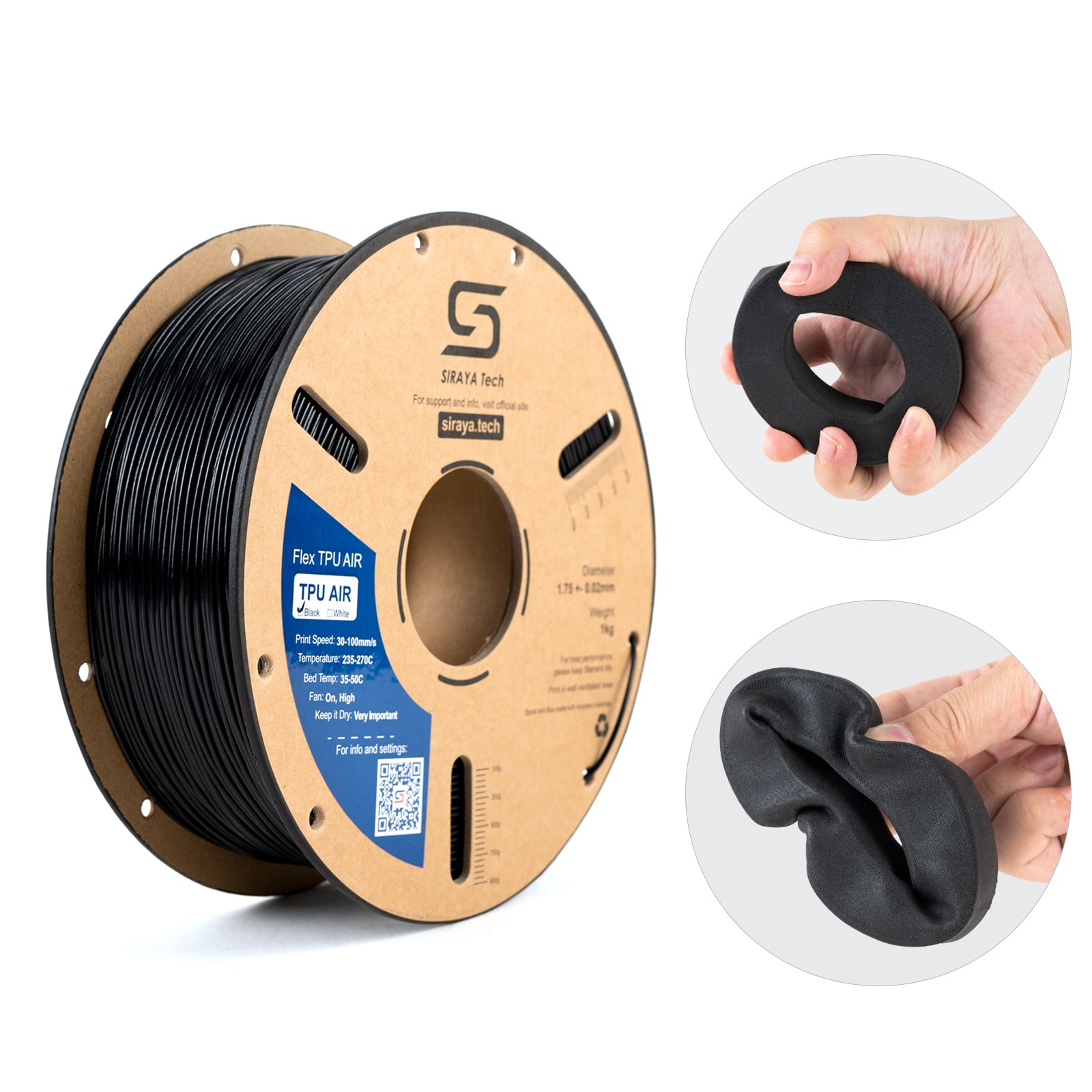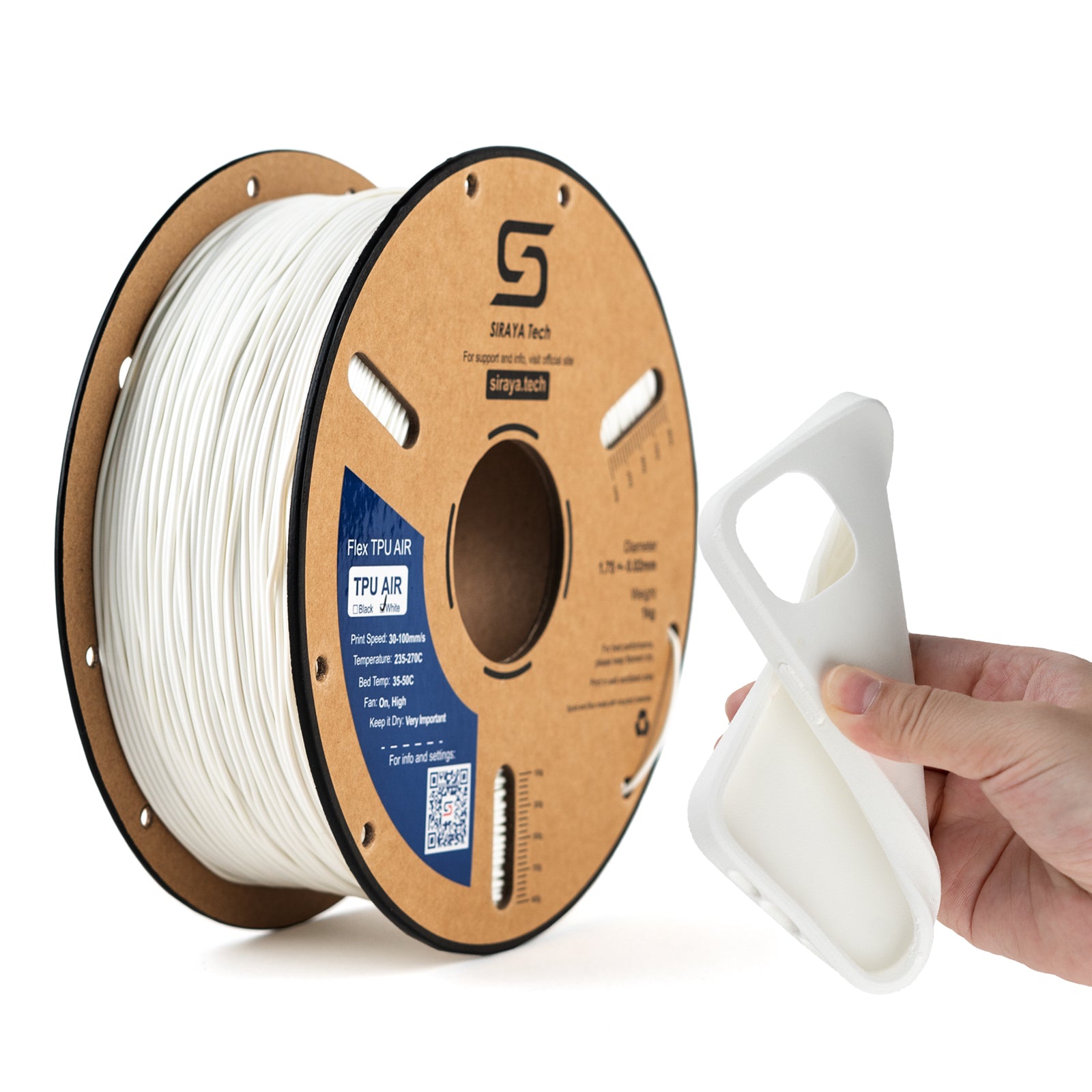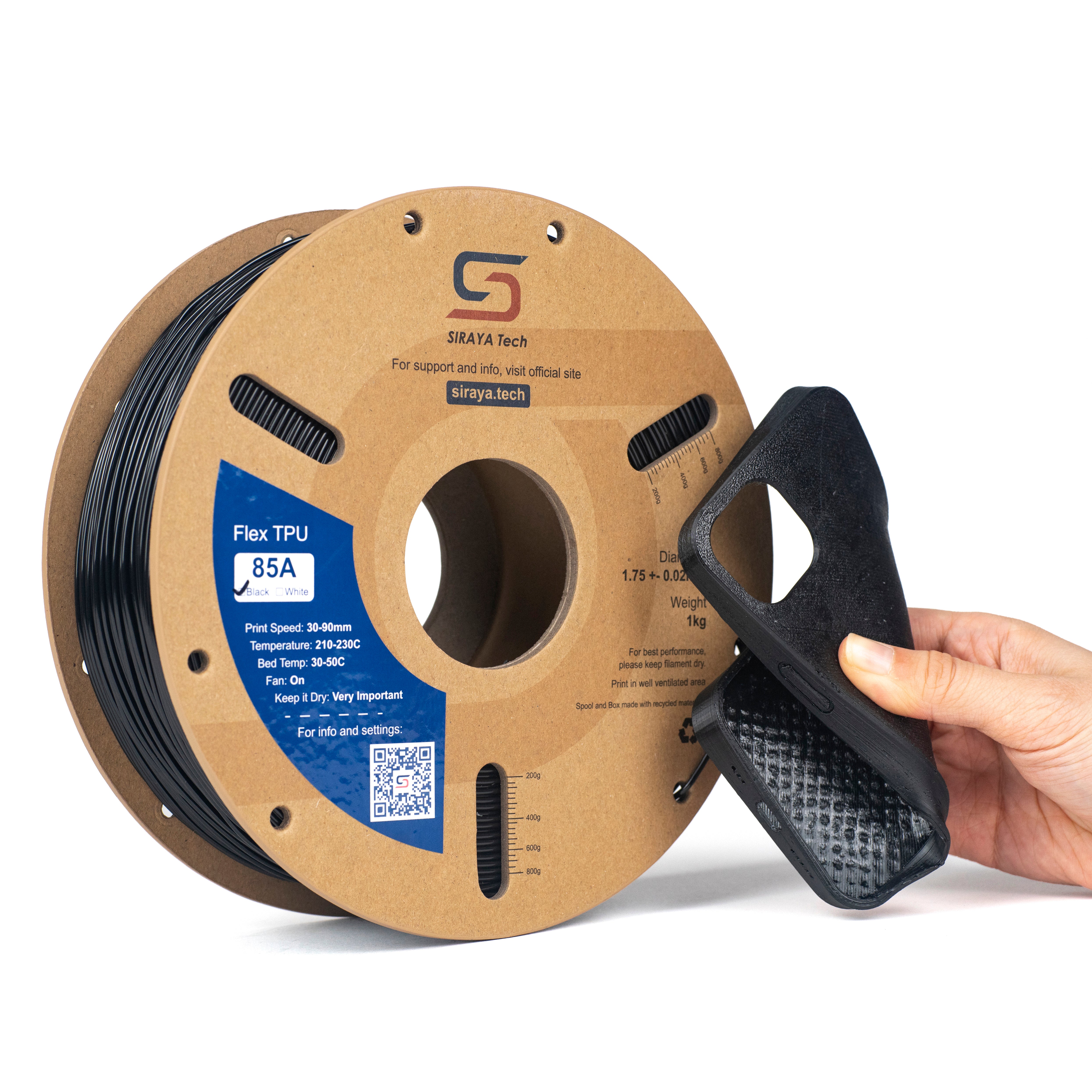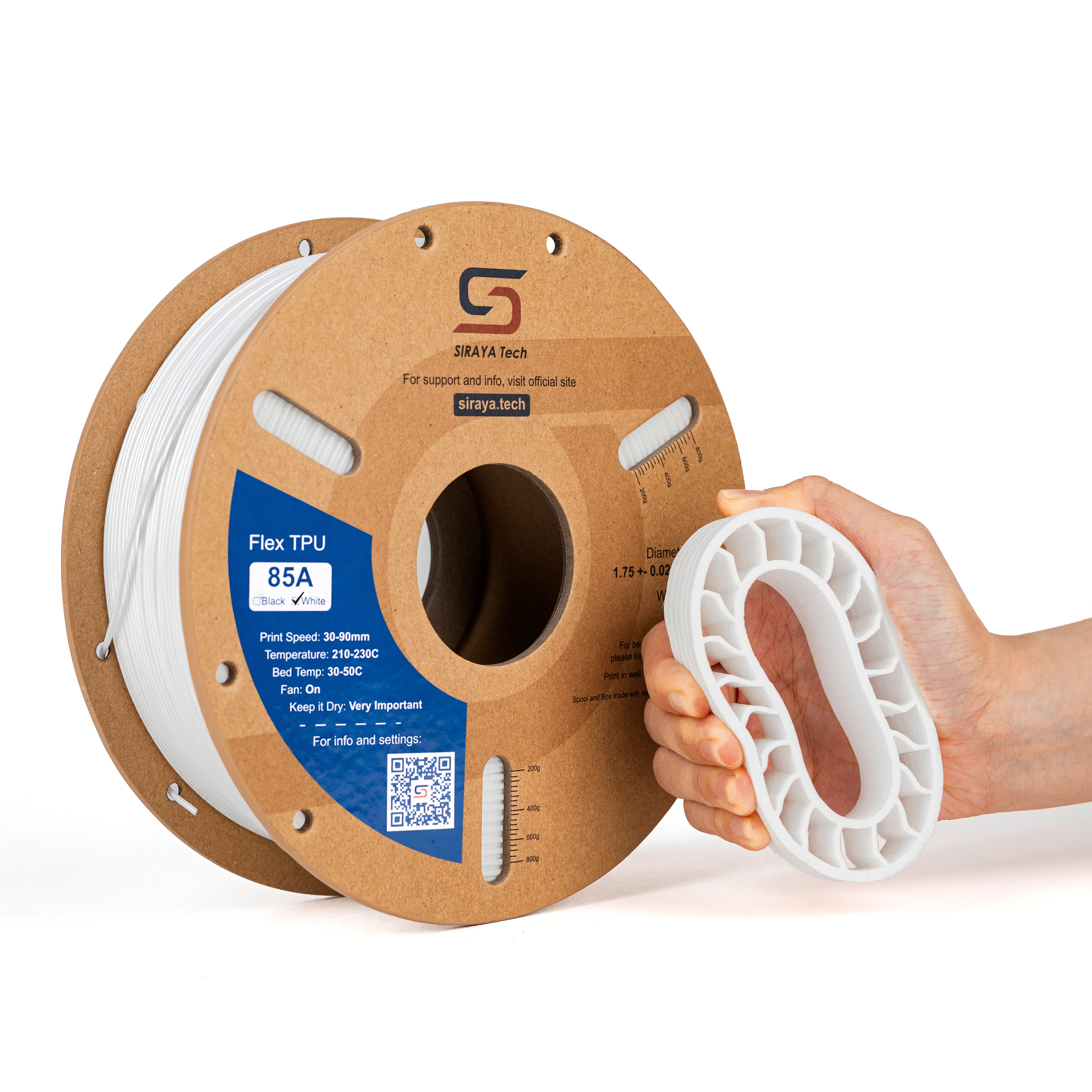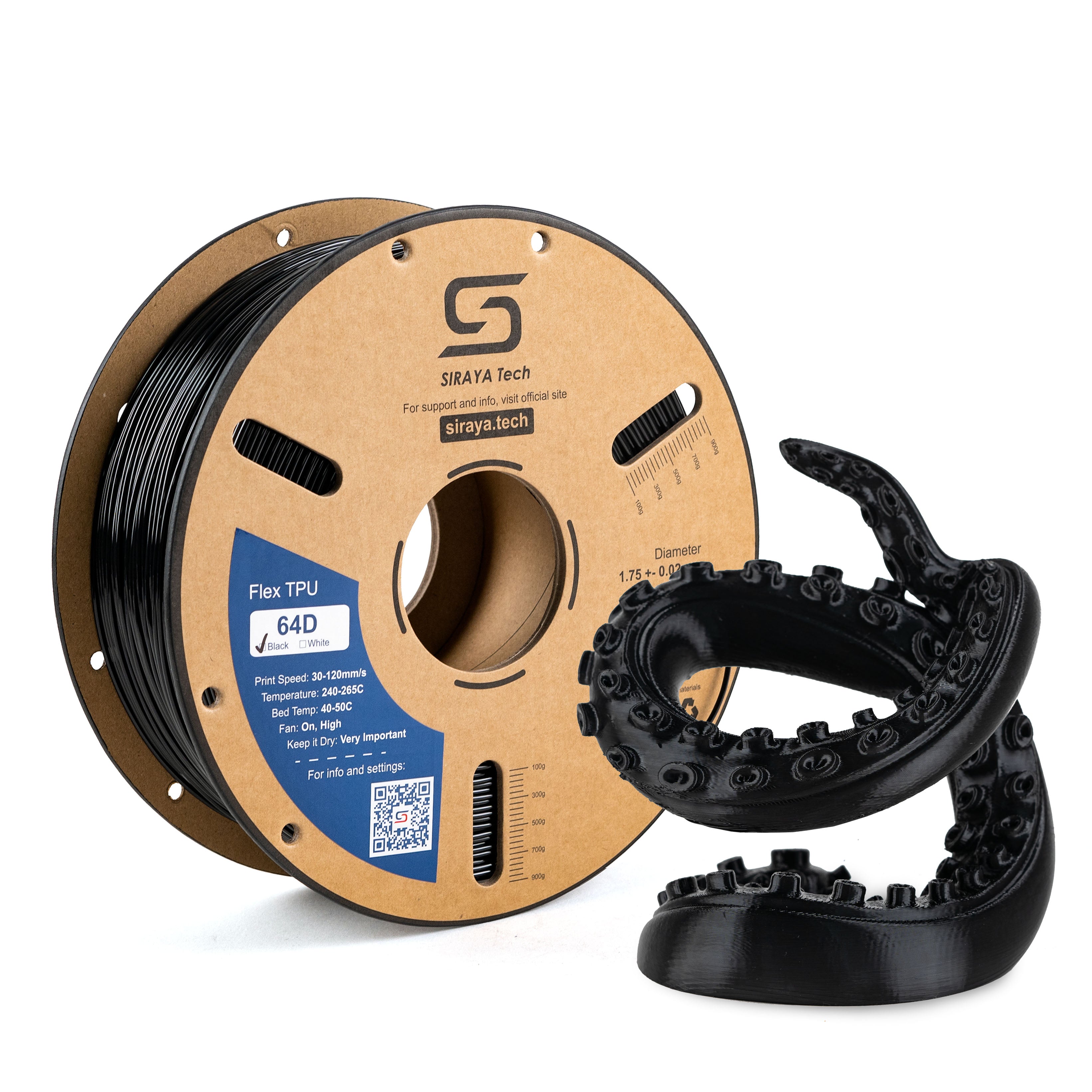
Discover premium flexible TPU filament from Siraya Tech, engineered to deliver exceptional elasticity and durability for your most demanding 3D printing projects. Our thermoplastic polyurethane materials combine rubber-like flexibility with the processing advantages of thermoplastics, making them ideal for functional parts that require bend, stretch, and impact resistance. From semi-rigid mechanical components to ultra-soft cushioning applications, our flexible TPU collection offers the perfect hardness grade for every project.
Flexible TPU for Superior Mechanical Performance
Our flexible TPU 3D printer filament delivers high tensile strength, excellent abrasion resistance, and robust layer adhesion that outperforms standard flexible materials. These formulations are engineered to withstand repeated stress, bending, and impacts, making them ideal for functional gears, rollers, and mechanical components that demand reliability.
Key features include:
- High tensile strength for load-bearing applications
- Excellent abrasion resistance for long-lasting parts
- Robust layer bonding that prevents delamination
- Withstands repeated bending and flexing cycles
-
Superior impact absorption compared to rigid materials
Looking for specialized textures? Explore our matte TPU filament collection for a premium non-slip surface finish.
Versatile Shore Hardness Options for Every Application
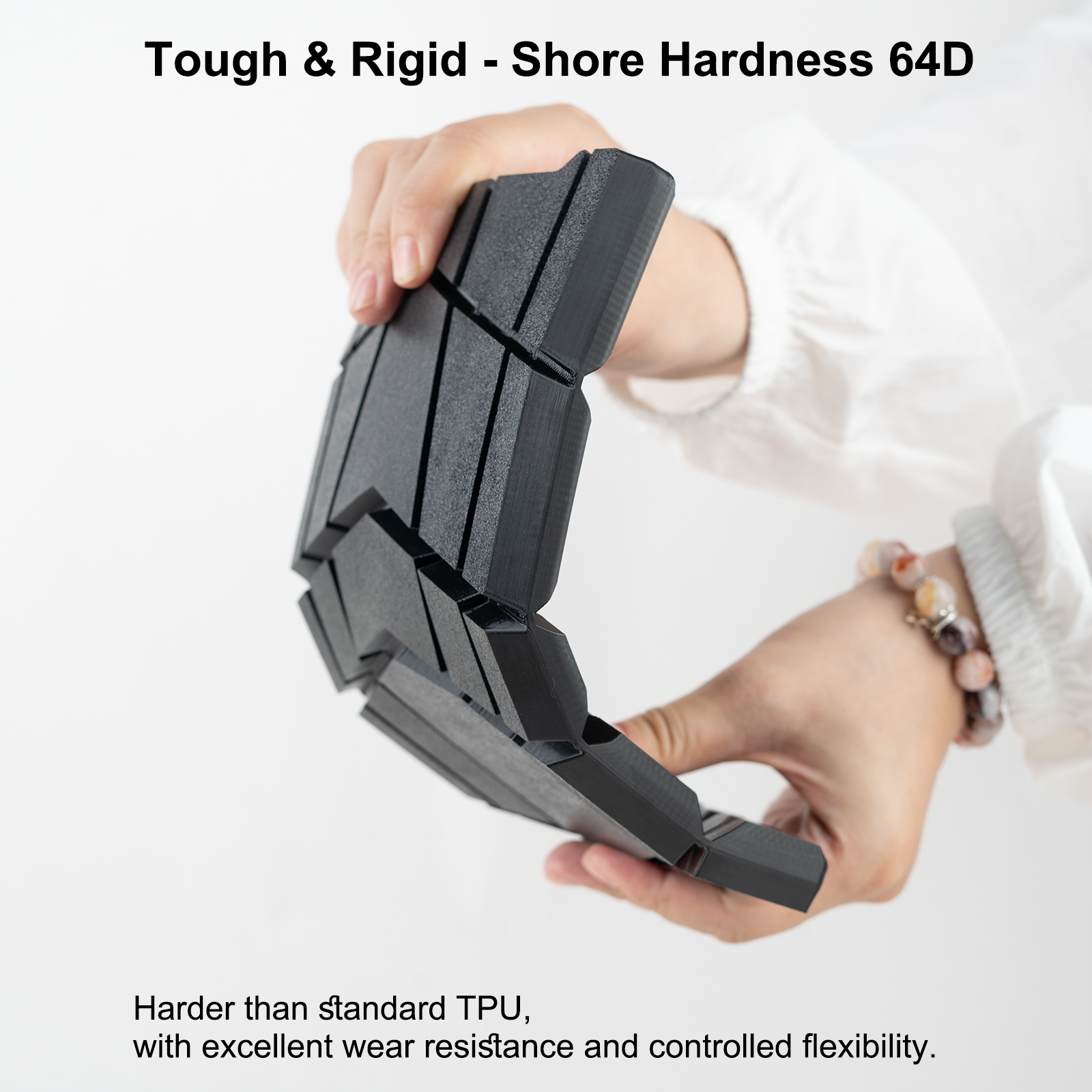
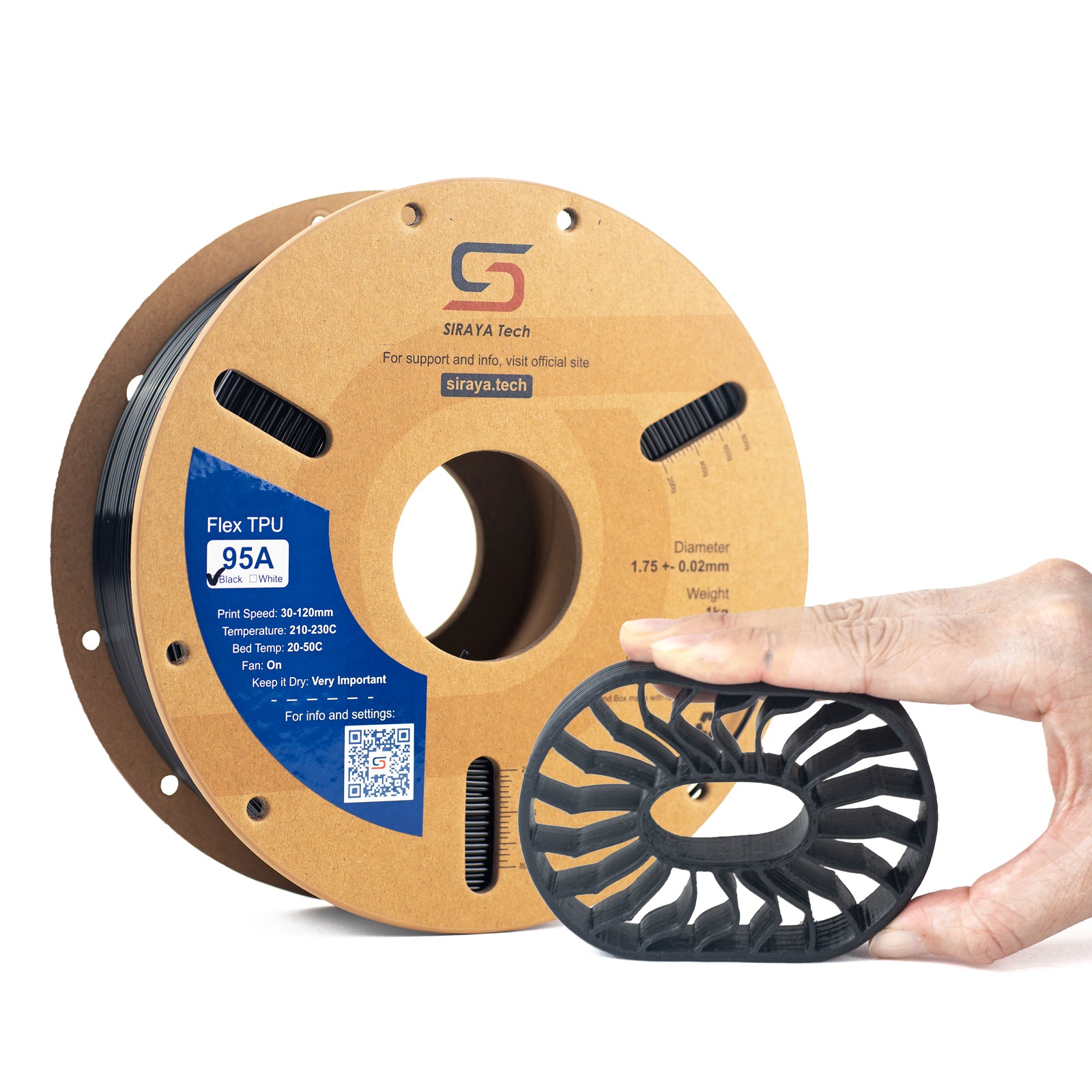
From semi-rigid 64D to ultra-soft 65A, our flexible filament TPU range provides precise control over flexibility and structural rigidity. Shore 64D offers greater structural stability and wear resistance while maintaining controlled flex for impact absorption, while softer grades like 85A and 95A deliver rubber-like elasticity perfect for grips and protective components.
Performance advantages:
- Shore hardness range from 64D to 65A for application-specific needs
- Semi-rigid options for parts requiring structural integrity with flex
- Ultra-soft grades for maximum cushioning and comfort
- Controlled flexibility for vibration dampening applications
-
Optimized formulations for each hardness level
Discover our complete range in the TPU filament collection for various hardness options.
TPU Flexible Filament with Enhanced Printability
Engineered for smooth, reliable printing with reduced stringing and clogging, our flexible TPU materials feature excellent feeding characteristics compatible with most standard FDM/FFF 3D printers. Advanced formulation ensures consistent extrusion and minimal print defects, even at the flexibility levels that challenge conventional materials.
Application benefits:
- Reduced stringing and oozing for cleaner prints
- Excellent feeding characteristics minimize jams
- Compatible with direct drive and properly configured Bowden systems
- Consistent diameter tolerance for reliable extrusion
- Works with standard printer temperatures and settings
For specialized lightweight applications, check out our foaming TPU filament collection that expands during printing for enhanced cushioning.
Industrial-Grade Durability for Demanding Applications
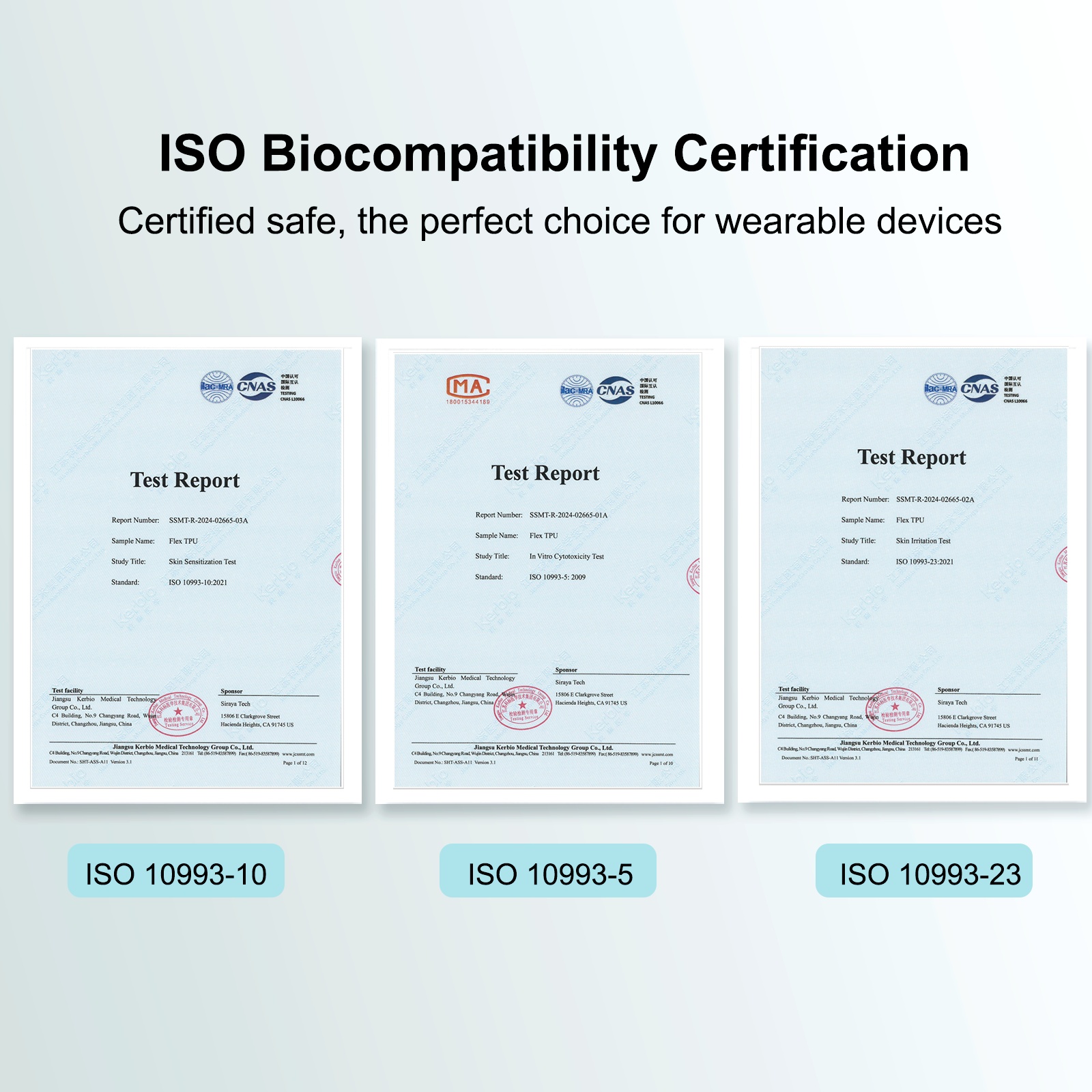
Flexible TPU plastic provides versatile solutions for jigs, fixtures, protective housings, vibration dampeners, and more—wherever a durable, abrasion-resistant flexible material is needed. ISO 10993 biocompatibility data available for select products supports evaluation for skin-contact applications.
Durability features:
- Chemical resistance to oils, greases, and mild solvents
- Wear resistance for high-friction environments
- ISO 10993 biocompatibility testing data available
- Maintains properties across wide temperature ranges
- Suitable for both indoor and outdoor applications
Frequently Asked Questions: Flexible TPU
What is a flexible TPU?
Flexible TPU is a thermoplastic polyurethane elastomer that combines rubber-like flexibility with the processing characteristics of thermoplastics. It can be melted and extruded for 3D printing while maintaining excellent elastic properties. TPU offers varying degrees of flexibility based on shore hardness, from semi-rigid 64D to ultra-soft 65A grades.
Is TPU as good as rubber?
TPU offers many advantages over traditional rubber, including easier processing, consistent quality, and excellent abrasion resistance. While natural rubber may excel in certain specialized applications, TPU provides superior wear resistance and can be precisely formulated to match specific hardness requirements. TPU also maintains its properties better over time without degradation.
Which is more flexible, TPU or PETG?
TPU is significantly more flexible than PETG. PETG is a rigid thermoplastic with minimal flex, while TPU is specifically designed as an elastomeric material. TPU can bend, stretch, and compress repeatedly without breaking, whereas PETG will crack under similar stress. For applications requiring flexibility, TPU is the clear choice over PETG.
Is TPU filament bendable?
Yes, TPU filament is highly bendable and elastic. Depending on the shore hardness grade, TPU can bend repeatedly without breaking or losing its shape. Softer grades like 85A and 95A offer extreme bendability similar to rubber, while semi-rigid grades like 64D provide controlled flex with more structural support. This bendability makes TPU ideal for living hinges and flexible joints.