Flexible Silicone
3 products
Showing 1 - 3 of 3 products
Flexible silicone is one of the most versatile mold-making materials available for fabricators, product designers, and makers working with 3D printed parts.
Whether you need to capture fine surface detail from a delicate SLA master or produce hundreds of casts from a single durable mold, the right silicone formulation makes the difference between a frustrating process and a reliable one.
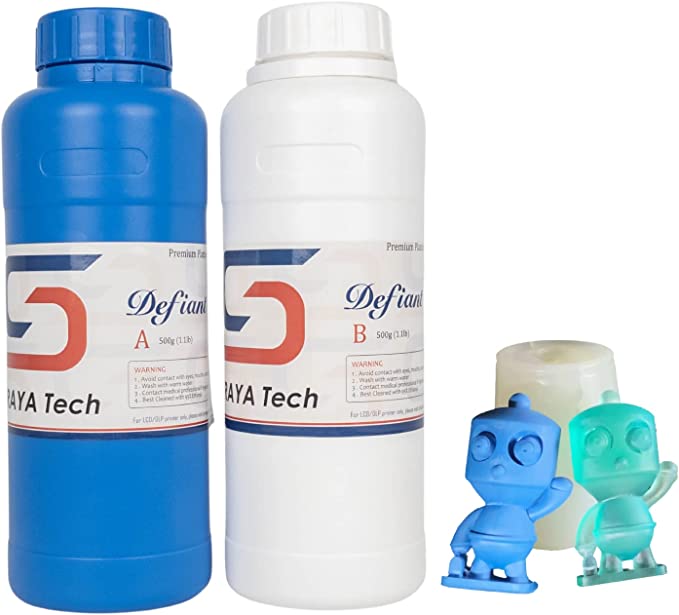
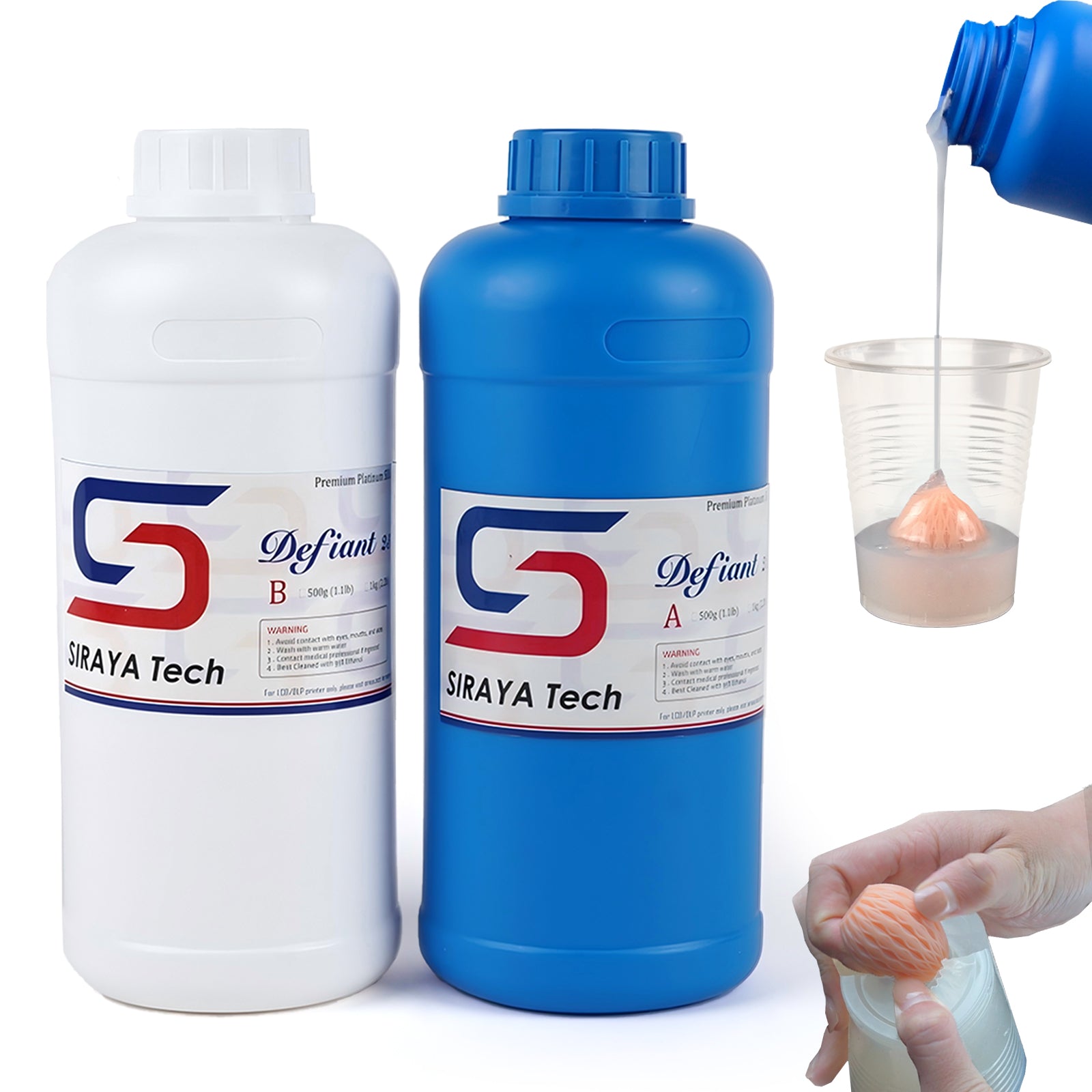
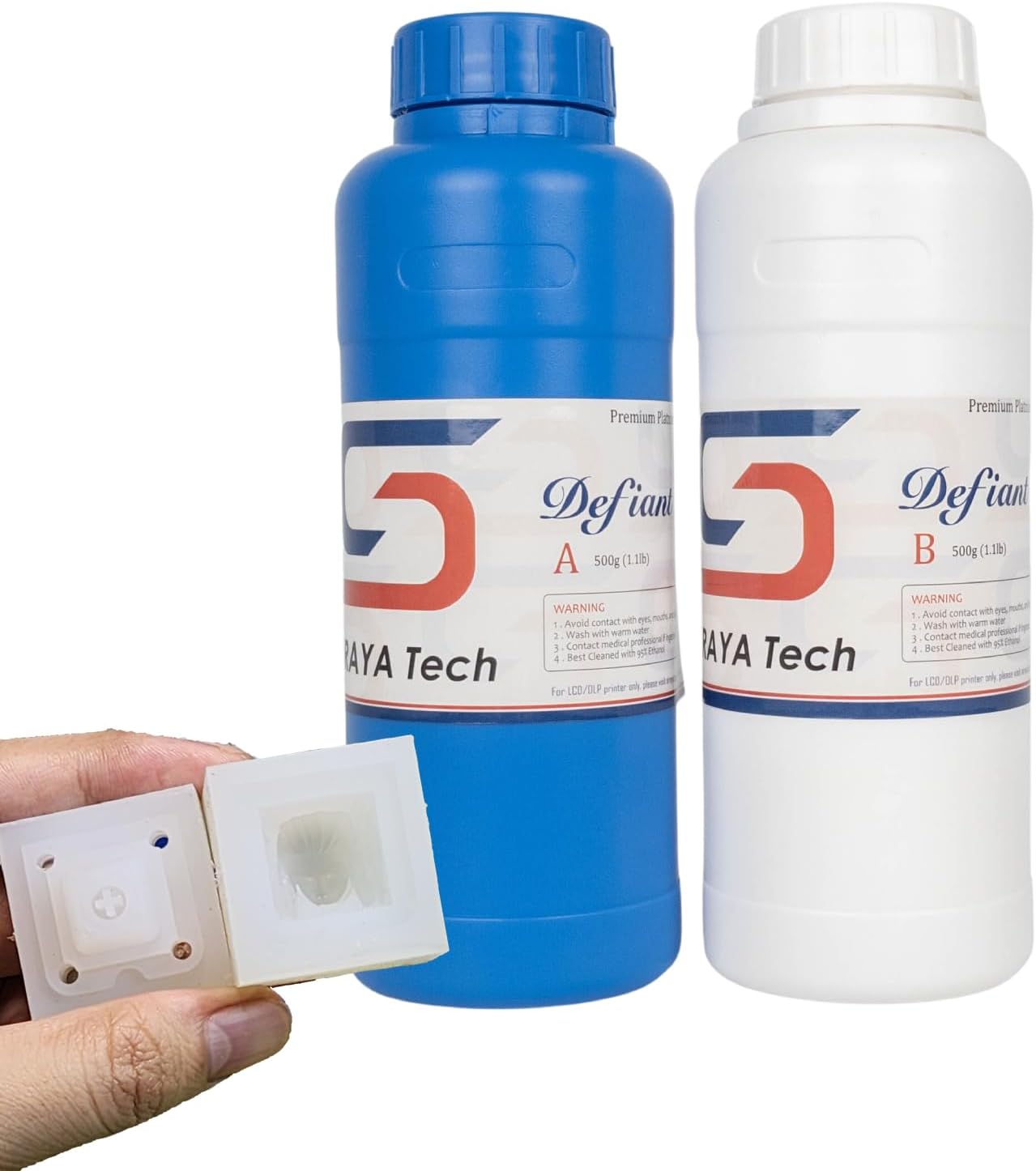
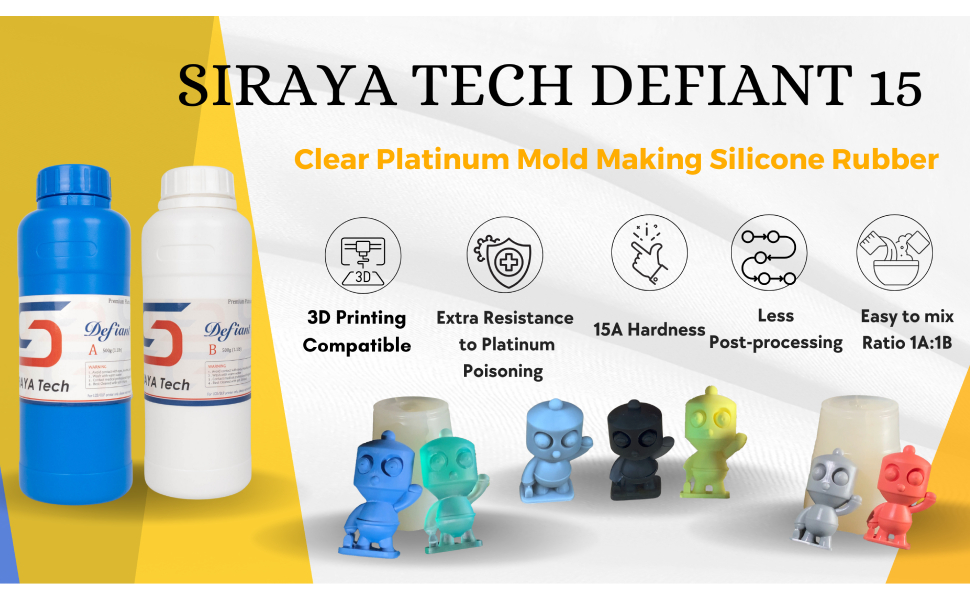
Siraya Tech Defiant Series platinum silicones offer three Shore hardness levels to handle everything from intricate prototype molds to heavy-production metal casting work.
Hardness Levels
- Defiant 10 (10A Shore) — Use this when your 3D printed master has thin walls, delicate features, or complex undercuts that would be damaged by a rigid mold. The soft silicone flexes during demolding and releases fragile geometry safely.
- Defiant 15 (15A Shore) — The general-purpose choice. It handles the broadest range of applications, from intricate prototype molds to medium-cycle production work. If you are unsure which hardness to use, Defiant 15 is almost always the right starting point.
- Defiant 25 (25A Shore) — Choose this for high-heat applications like metal casting or for production runs where mold durability is critical. The firmer composition resists deformation under compression and thermal cycling.
Key Applications
- Resin Casting — Make accurate copies of your SLA prints using silicone molds. The Innovative Silicone Mold Kit guide covers this workflow in detail.
- Jewelry Casting — Platinum silicone handles the burnout temperatures required for lost-wax processes and produces clean, detailed castings in precious metals.
- Metal Casting — Defiant 25 handles molten pewter poured at around 230 to 250 degrees Celsius without degrading or deforming the mold.
- Prototype Parts — Make durable molds for urethane resin casting, custom gaskets, prototype seals, and functional parts.
- Food-Safe Molding — Once fully cured, Defiant silicones are food-safe and used for chocolate molds, soap casting, and confectionery applications.
Workflow for Best Results
Flexible Silicone vs. Rigid Mold Materials
Flexible silicone and rigid mold materials like concrete, plaster, or epoxy serve different purposes in fabrication. Silicone flexes during demolding, which makes it uniquely suited to capturing complex geometry without damage.
Rigid molds cannot flex, so they require patterns with no undercuts or complex geometry, or they require a mold design with multiple rigid sections that can be assembled and disassembled.
For 3D printed parts, silicone is almost always the better choice. A 3D printed master is typically more expensive and time-consuming to produce than a silicone mold, and silicone protects that investment during demolding by flexing rather than forcing the pattern through a rigid opening.
This comparison of resin vs. silicone covers when each material is the better choice for your project.
Durability and Molding Life
The life of a flexible silicone mold depends on several factors: the Shore hardness of the silicone, the complexity of the part being cast, the materials being used, and how the mold is handled between uses.
Defiant 25 molds used for metal casting can survive dozens to hundreds of castings with proper care. Defiant 10 and 15 molds used for resin casting typically last for dozens of castings. The softer grades are more prone to wear in high-cycle production environments, but they also tend to protect delicate master patterns better during demolding.
Cleaning and storing molds properly between uses extends their working life significantly.
The Defiant silicone care guide covers cleaning and maintenance in detail.
Why Choose Defiant for Your Flexible Silicone Needs
Siraya Tech Defiant Series was developed out of real fabrication needs from professional prop makers and product designers who use 3D printed masters daily.
The core problem they needed solved was the compatibility between 3D printed surfaces and mold-making silicones. Standard tin-cure silicones frequently failed on 3D printed parts due to cure inhibition.
Defiant eliminates this problem with platinum-cure chemistry specifically formulated to resist inhibition from UV resin surfaces.
The three-hardness system lets you match the silicone to your application rather than making a one-size-fits-all compromise. Whether you need maximum flexibility for delicate prototypes or maximum durability for production metal casting, Defiant has an option that fits.
Shop Related Collections
Related Articles
Frequently Asked Questions
What is the difference between Shore 10A, 15A, and 25A silicone?
Can I pour flexible silicone directly over my 3D printed part?
Which Defiant silicone should I use for jewelry making?
How do I achieve the longest mold life with Defiant silicone?
Is Defiant silicone food safe?
How many castings can a Defiant silicone mold produce?