Casting Resin
2 products
Showing 1 - 2 of 2 products
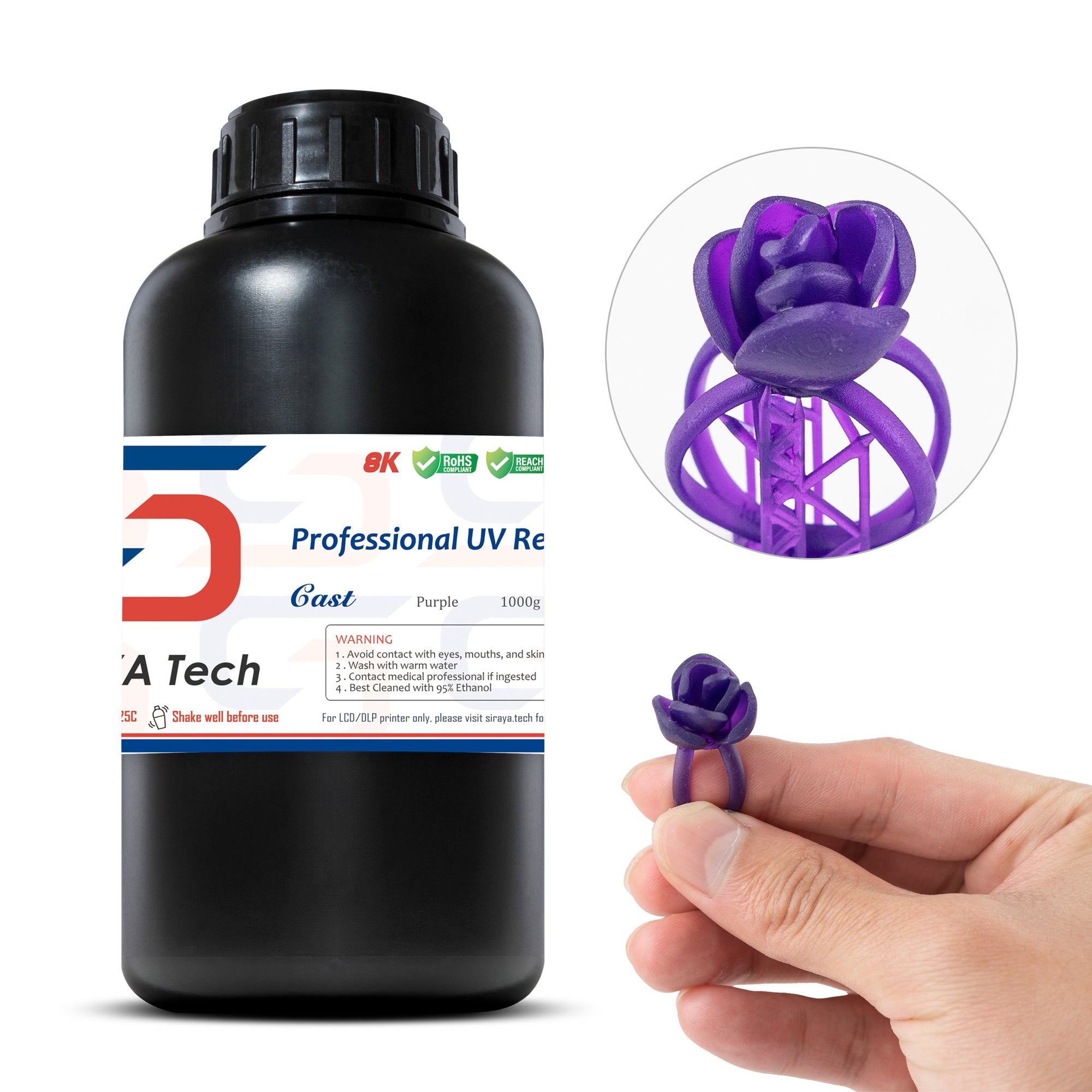
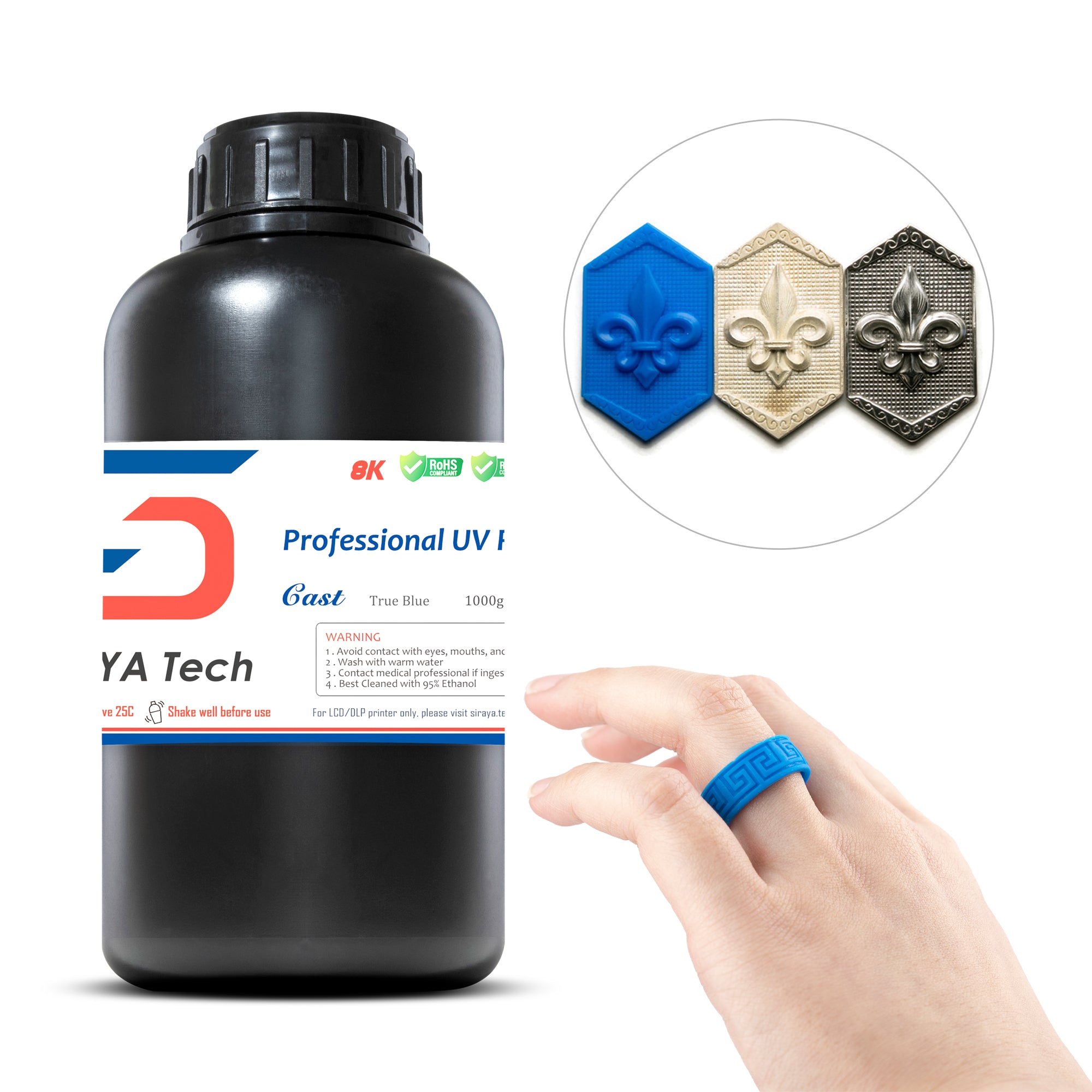
Casting resin is the bridge between digital design and real-world parts. At Siraya Tech, our casting resin collection is built for makers who want clean burnouts, sharp detail, and reliable results from print to mold.
These resins are tuned for precision casting, jewelry work, dental forms, and small mechanical parts where accuracy matters.
Our casting resin lineup supports modern 3D printing workflows, especially LCD and DLP printers. You get resins that print clean, cure evenly, and burn out with low ash. That means better molds, stronger final casts, and less cleanup after.
Clean Burnout That Protects Your Mold and Your Time
Designed for smooth burnout cycles, these casting resins leave minimal residue and keep mold walls intact.
Low-Ash Formulas for Reliable Investment Casting
These resins are made to burn out clean at controlled temperatures. You get fewer cracks, less contamination, and better metal flow.
- Reduced ash for cleaner cavities
- Stable burnout behavior across common schedules
- Helps preserve fine mold details
Predictable Thermal Behavior During Firing
Controlled expansion lowers stress on the investment. This reduces the risk of mold failure during high heat.
- Consistent results across batches
- Better success with complex geometries
- Fewer surprises in the kiln
High Detail Prints That Transfer to Perfect Casts
Casting resin should capture what you design. These materials focus on sharp edges and smooth faces.
Crisp Surface Finish Straight From the Printer
Fine features stay intact through printing and casting. This saves time on sanding and polishing.
- Smooth surfaces with less post-work
- Clear edges and thin walls
- Great for jewelry and mini parts
Dimensional Accuracy You Can Trust
Low shrinkage helps keep parts true to size. What you model is what you cast.
- Better fit for assemblies
- Consistent results across reprints
- Ideal for professional workflows
Strong Green Parts That Are Easy to Handle
Before burnout, parts need strength. These casting resins balance toughness with clean removal.
Less Breakage During Cleanup and Handling
Printed parts resist cracking when you remove supports. This is key for thin or delicate shapes.
- Easier support removal
- Fewer failed prints before casting
- Safer handling during setup
Stable Prints for Complex Molds
Strong green strength helps parts hold shape. This matters for tall or detailed models.
- Supports complex designs
- Reduces warping before curing
- More confidence in large print jobs
Tuned for Modern 3D Printing Setups
These resins work smoothly with common printer settings and workflows.
Reliable Curing With Standard UV Systems
You do not need exotic settings. Exposure times stay practical and repeatable.
- Works with LCD and DLP printers
- Even layer curing
- Fewer print artifacts
Easy Post-processing Before Casting
Cleaning and curing steps are simple and fast. This keeps your workflow moving.
- Quick rinse and cure
- Less sticky residue
- Ready for burnout sooner
Explore Related Collections From Siraya Tech
Expand your workflow with materials that pair well with casting resin.
- Flexible Resin 3D Printing – Add impact resistance and flex for parts that need bend before casting or molding.
- Silicone – Great for mold making and soft tooling when resin casting needs flexibility.
- Heat Resistant Filament– Useful for fixtures, jigs, and tools that face high temperatures near casting setups.
- Strong Filament– Build durable holders and frames that support your casting process.
FAQs on Casting Resin
What should you not cast in resin?
You should not cast items that contain moisture, air pockets, or organic matter like fresh plants. Moisture can cause bubbles, clouding, or incomplete curing. Some plastics and foams can also react with resin and melt or release gases during curing.
What are the basics of resin casting?
Resin casting starts with mixing resin and hardener at the correct ratio. The mixture is then poured into a mold and left to cure for a set time. Clean molds, proper mixing, and controlled temperature are key for good results.
What does casting resin not stick to?
Casting resin does not stick well to silicone, polyethylene, or polypropylene. These materials are often used for molds and mixing tools. Mold release sprays can also help prevent sticking on other surfaces.
How long does it take for casting resin to dry?
Dry time depends on resin type, temperature, and pour thickness. Most casting resins set within a few hours and fully cure in 24 to 72 hours. Thicker pours may take longer to harden all the way through.
Can casting resin be used with 3D printed molds?
Yes, casting resin works well with 3D printed molds if they are sealed and smooth. Unsealed prints can trap air or absorb resin. Proper post-processing helps improve surface finish and mold life.