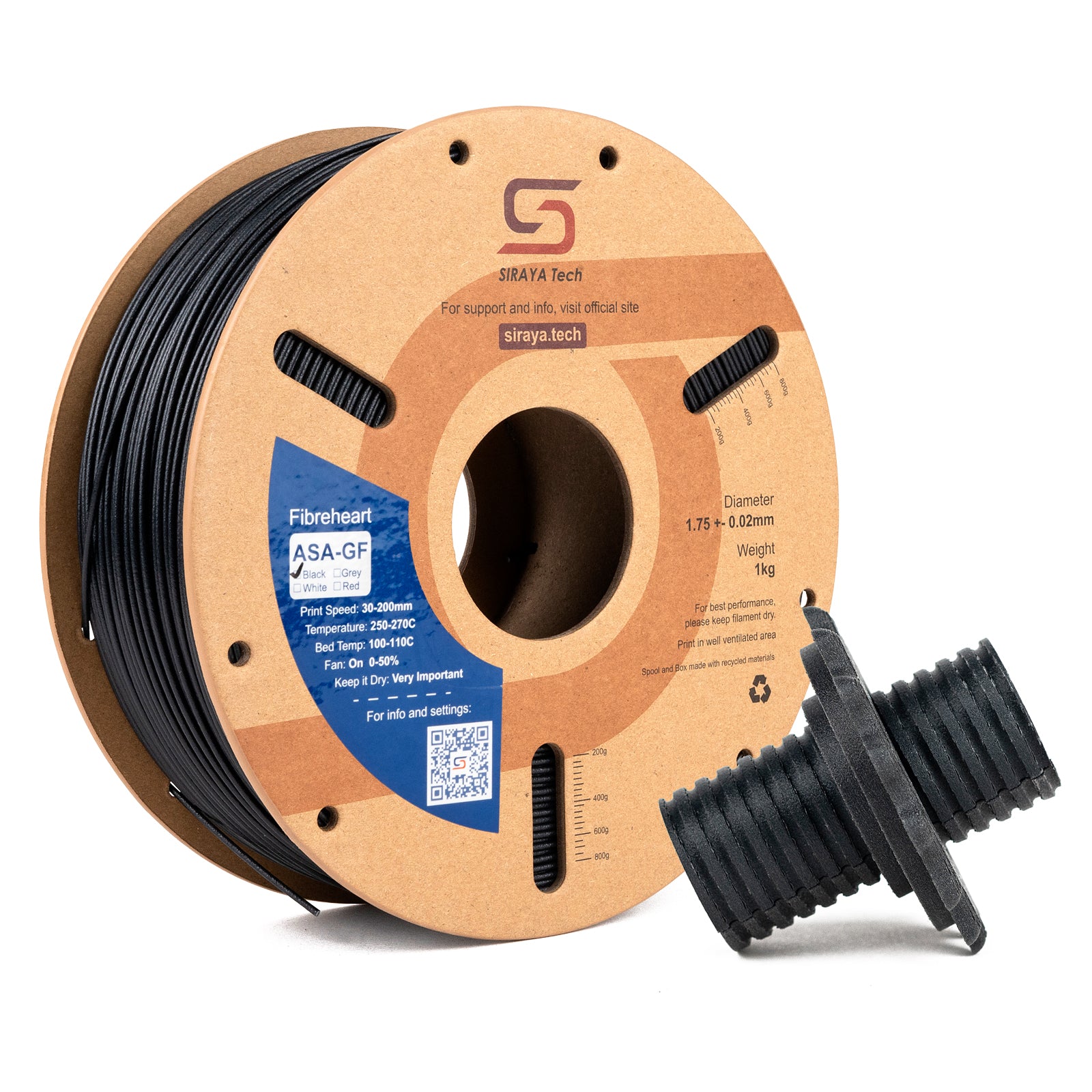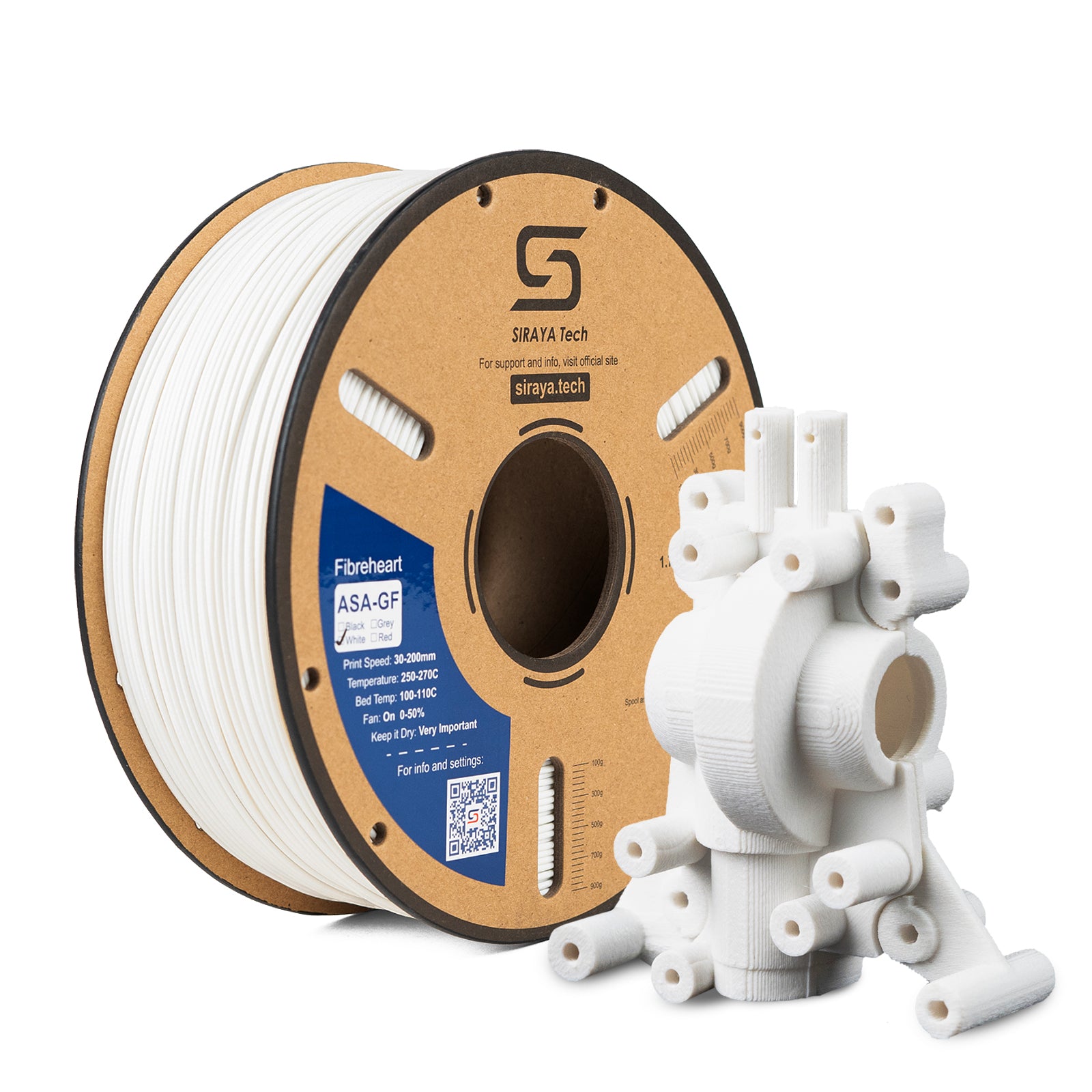
ASA GF Filament
1 product
Showing 1 - 1 of 1 product
Achieve exceptional weather resistance and mechanical strength with our ASA GF filament designed for outdoor and high-performance applications. Whether you're manufacturing automotive components, outdoor fixtures, or UV-resistant functional parts, our glass fiber reinforced ASA formulations deliver superior durability and dimensional stability for demanding environmental conditions.
ASA GF Filament for Superior Outdoor Performance
Our ASA GF filament combines the outstanding weather resistance of ASA with the enhanced mechanical properties of glass fiber reinforcement. This advanced composite material creates parts that withstand prolonged UV exposure, temperature fluctuations, and harsh environmental conditions without degradation.
Key features that maximize durability:
- 10% chopped glass fiber reinforcement delivers exceptional stiffness and strength
- Outstanding UV resistance prevents fading and brittleness
- Excellent weather resistance withstands rain, humidity, and temperature extremes
- Enhanced dimensional stability maintains tight tolerances
-
Superior heat resistance with HDT of 92-97°C for demanding applications
Explore our PETG HF filament collection for high-flow materials that combine speed with chemical resistance.
Enhanced Mechanical Properties for Functional Parts
Glass fiber reinforced ASA filament excels in creating parts that need to resist environmental stress while maintaining structural integrity. This material delivers the rigidity and toughness required for automotive trim, outdoor enclosures, and functional components exposed to the elements.
Performance advantages you'll appreciate:
- Significantly higher strength and stiffness than standard ASA
- Excellent impact resistance even in demanding conditions
- Superior creep resistance for long-term dimensional stability
- Enhanced warping resistance ensures precise, consistent results
- Glass transition temperature of 106°C for thermal stability
Check out our complete [TPU filament collection for flexible materials when your applications require elasticity and weather resistance.
Exceptional UV and Weather Resistance
ASA glass fiber filament provides unmatched outdoor durability that maintains color and mechanical properties through years of UV exposure. This weather resistance combined with glass fiber reinforcement creates parts that survive harsh conditions where other materials would fail.
Environmental and thermal benefits include:
- Exceptional UV stability prevents aging and discoloration
- Outperforms ABS-GF in outdoor durability and color retention
- Maintains physical properties under harsh weather conditions
- Chemical resistance to automotive fluids and industrial chemicals
-
Elevated heat deflection temperature of 92-97°C (1.8-0.45 MPa)
For even higher temperature requirements, browse our PAHT-CF filament collection designed for extreme thermal conditions.
Professional Automotive and Outdoor Applications
Our glass fiber reinforced ASA filament solutions excel in applications requiring both weather resistance and mechanical performance. Every spool maintains precise specifications and consistent quality for repeatable professional results.
Ideal applications and specifications:
- Automotive exterior parts and functional components
- Outdoor fixtures and weather-resistant housings
- Building materials and architectural elements
- Garden furniture, signage, and sports equipment
- Requires hardened steel nozzle for abrasive glass fibers
- Recommended nozzle temperature: 250-270°C
- Bed temperature: 100-110°C (glass, PEI, or PC film)
- Enclosure temperature: 60-80°C for optimal results
- Dry filament at 70-80°C for 4-6 hours after long-term storage
Frequently Asked Questions: ASA GF Filament
What is ASA GF filament?
ASA GF filament is a composite 3D printing material that combines acrylonitrile styrene acrylate (ASA) polymer with 10% chopped glass fiber reinforcement. This creates a material with exceptional UV resistance, weather durability, and enhanced mechanical properties. The glass fibers improve strength, stiffness, and dimensional stability while ASA provides outstanding outdoor performance. It features a glass transition temperature of 106°C and HDT of 92-97°C, making it ideal for automotive parts, outdoor fixtures, and applications exposed to harsh environmental conditions.
What is ASA filament good for?
ASA filament excels in outdoor and automotive applications requiring UV resistance and weather durability. It's ideal for automotive exterior parts, outdoor fixtures, building materials, garden furniture, signage, and sports equipment. ASA maintains color and mechanical properties through prolonged UV exposure, outperforms ABS-GF in outdoor durability, and handles high-temperature industrial applications. The glass fiber reinforced version offers enhanced strength and impact resistance for demanding functional components.
Is ASA stronger than PLA?
ASA offers superior impact strength and toughness compared to PLA, especially in real-world conditions. ASA-GF with 10% glass fiber reinforcement provides significantly increased strength and stiffness beyond standard materials. While PLA may have slightly higher tensile strength, ASA provides better ductility, impact resistance, and doesn't become brittle with UV exposure like PLA. ASA also offers significantly better heat resistance (HDT 92-97°C) and maintains mechanical properties in outdoor environments where PLA would degrade.
Is ASA better than PETG?
ASA and PETG each excel in different applications. ASA provides superior UV resistance and outdoor durability, maintaining color and physical properties through years of sun exposure where PETG would degrade. ASA-GF offers higher thermal stability with a glass transition temperature of 106°C compared to PETG. However, ASA requires an enclosure (60-80°C) and careful printing conditions. Choose ASA-GF for outdoor applications, automotive parts, and high-temperature environments; choose PETG for indoor functional parts requiring easier printing and chemical resistance.