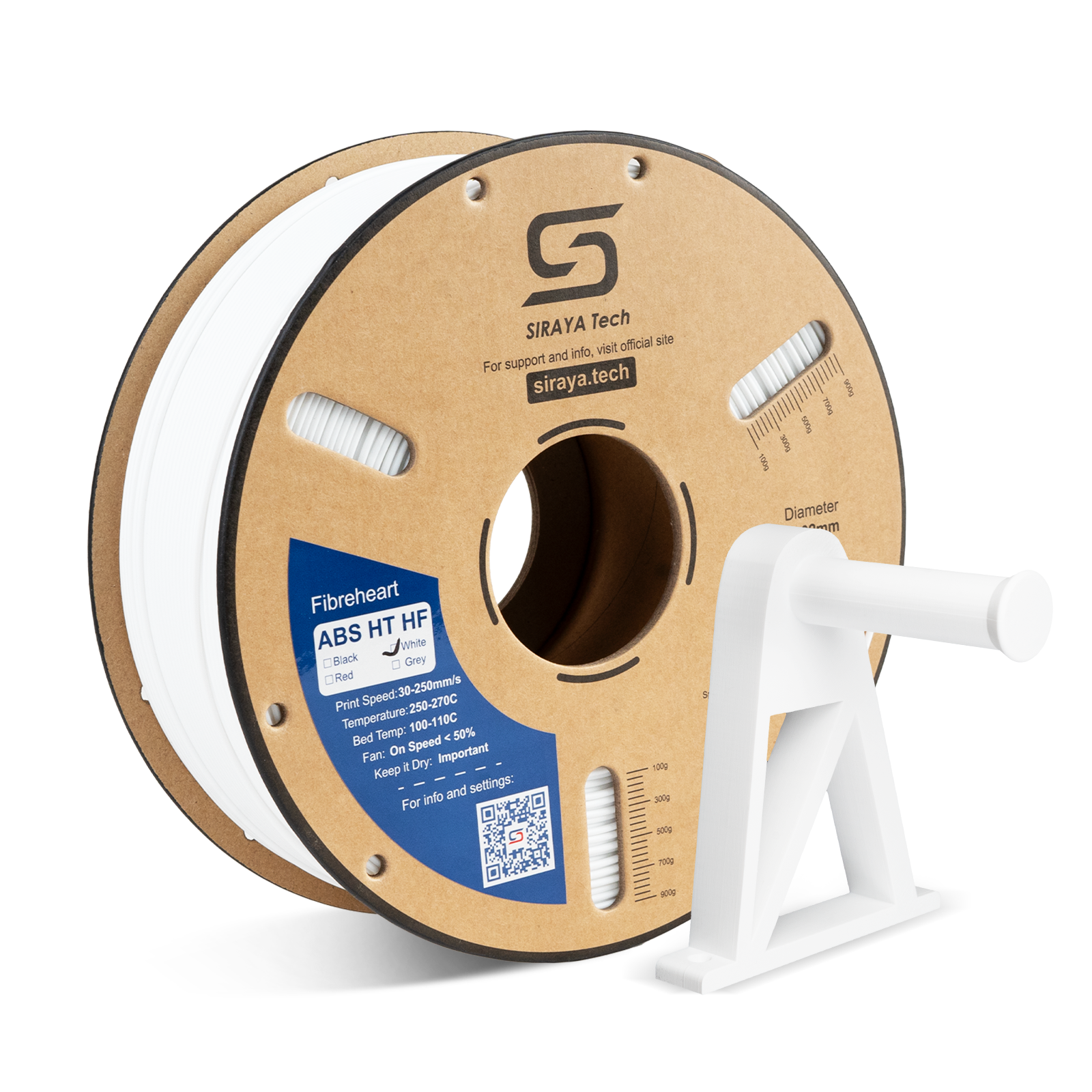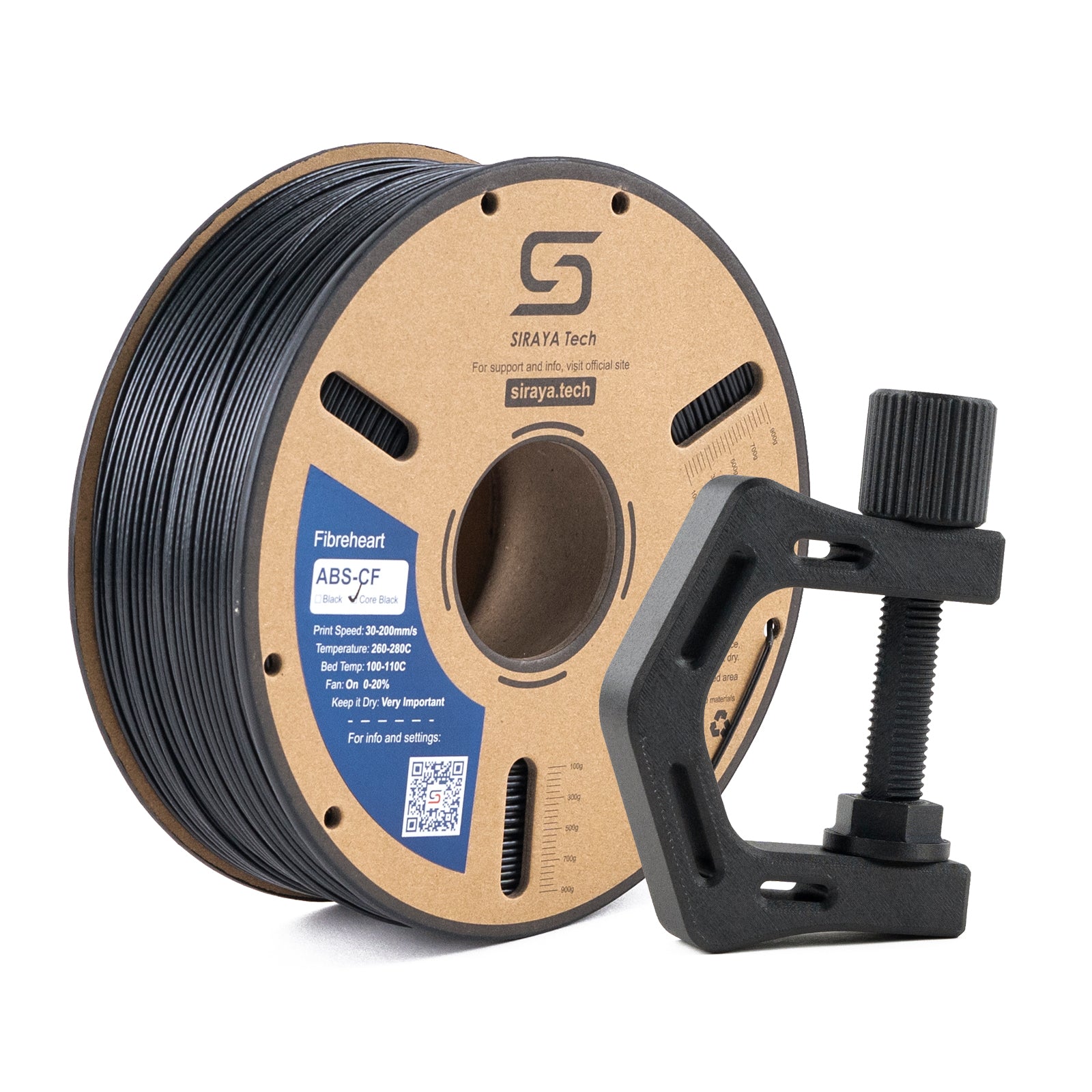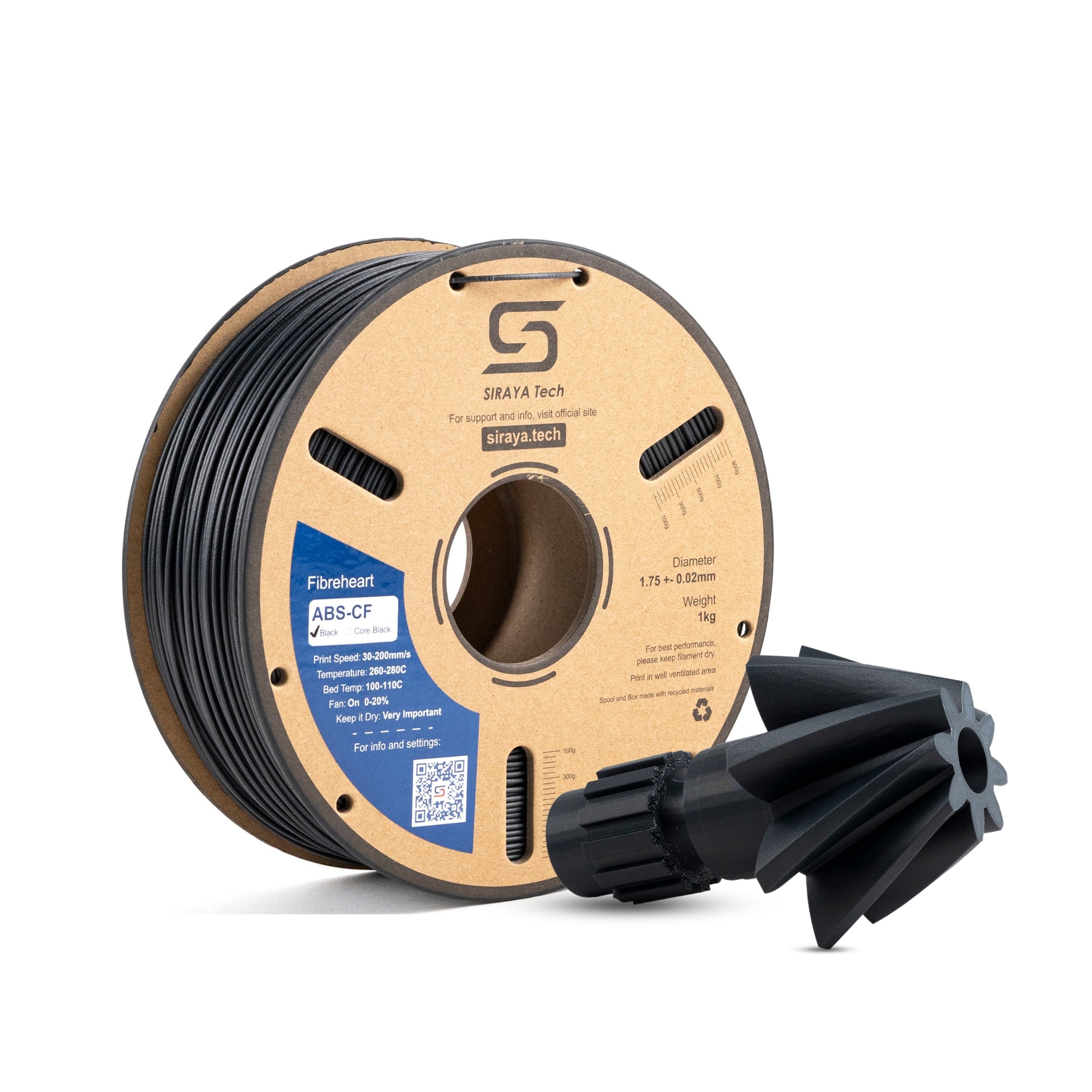
ABS Filament 1.75mm
8 products
Showing 1 - 8 of 8 products
ABS filament 1.75mm is the workhorse of functional 3D printing. It prints easier than advanced engineering materials, handles post-processing well, and delivers parts that are noticeably tougher than PLA. Siraya Tech's 1.75mm ABS range covers everything from standard reinforced ABS to carbon fiber and glass fiber versions that push the material into genuine engineering territory.
What Is ABS Filament
ABS (Acrylonitrile Butadiene Styrene) is a thermoplastic used across injection molding, automotive parts, and consumer electronics. In 3D printing it has been the standard for functional prototypes and end-use parts for years because it offers a practical balance of printability, toughness, and post-processability.
Standard ABS prints at around 230C to 250C on a heated bed. It warps less than some advanced materials and responds well to acetone vapor smoothing, sanding, and painting. Reinforced ABS grades take those base properties and improve them with fiber additives, making the material significantly stiffer and more dimensionally stable.
- Stronger and more impact-resistant than PLA, especially at lower temperatures
- Responds to acetone vapor smoothing for smooth, glossy finishes
- Sanded and painted easily for post-processed parts
- Reinforced grades with carbon or glass fiber offer stiffness comparable to some metals
- 1.75mm diameter works with most desktop FDM printers
ABS vs. PLA: Which Should You Choose
PLA is easier to print and works on almost any machine without a heated chamber. ABS produces tougher parts with better thermal resistance, but it requires a heated bed and benefits from an enclosure to prevent warping. For most functional prototyping and end-use parts, ABS is the stronger choice.
- Strength and impact resistance: ABS handles impacts better and does not become brittle over time the way PLA can. For parts that take knocks or are used outdoors, ABS holds up longer.
- Temperature resistance: ABS softens around 100C. PLA starts deforming around 60C. If your part will be in a warm environment, ABS is the better choice.
- Post-processing: ABS responds to acetone vapor smoothing, sanding, and painting. PLA can be sanded but does not smooth with acetone. If a smooth cosmetic finish matters, ABS is the way to go.
- Printability: PLA wins here. It adheres to most beds without issues and does not emit strong fumes. ABS requires more careful bed adhesion and ventilation, but the mechanical performance payoff is significant.
- Reinforcement matters: Carbon fiber or glass fiber reinforced ABS takes the toughness of ABS and adds stiffness and dimensional stability on top. A CF-ABS bracket can replace machined aluminum in many applications.
When to Choose Reinforced ABS Over Standard ABS
Standard ABS handles most prototyping and functional parts well. Reinforced grades make sense when you need more from the material without moving to a completely different polymer family.
- Structural load: Carbon fiber ABS and glass fiber ABS have significantly higher flexural modulus than standard ABS. If the part bears a load, reinforced grades resist deformation better.
- Dimensional precision: Fiber reinforcement reduces thermal expansion during printing and in warm environments. Parts hold tighter tolerances with reinforced grades.
- Weight reduction: Carbon fiber reinforcement adds stiffness without the weight penalty of standard ABS. Drone frames and automotive brackets benefit from this combination.
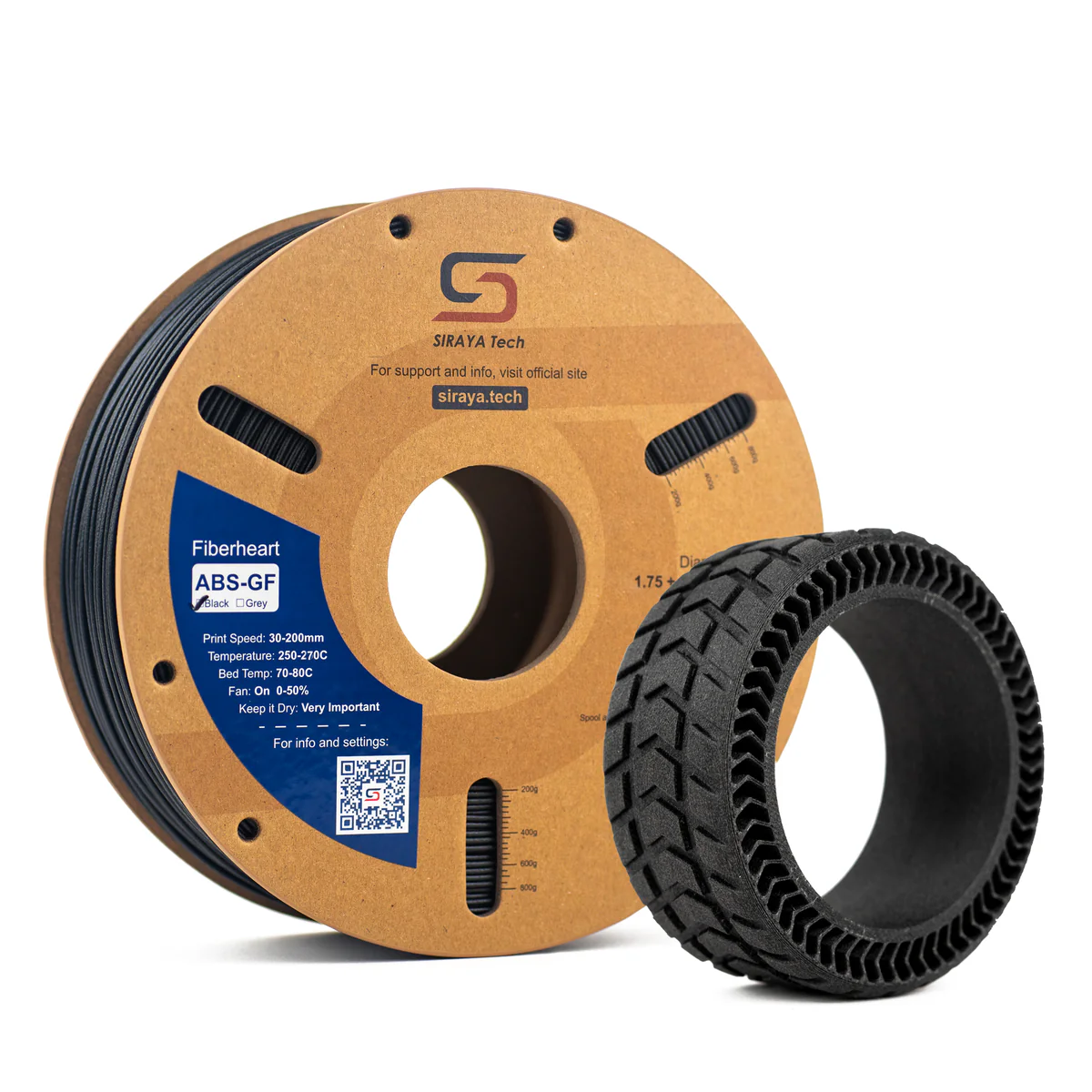
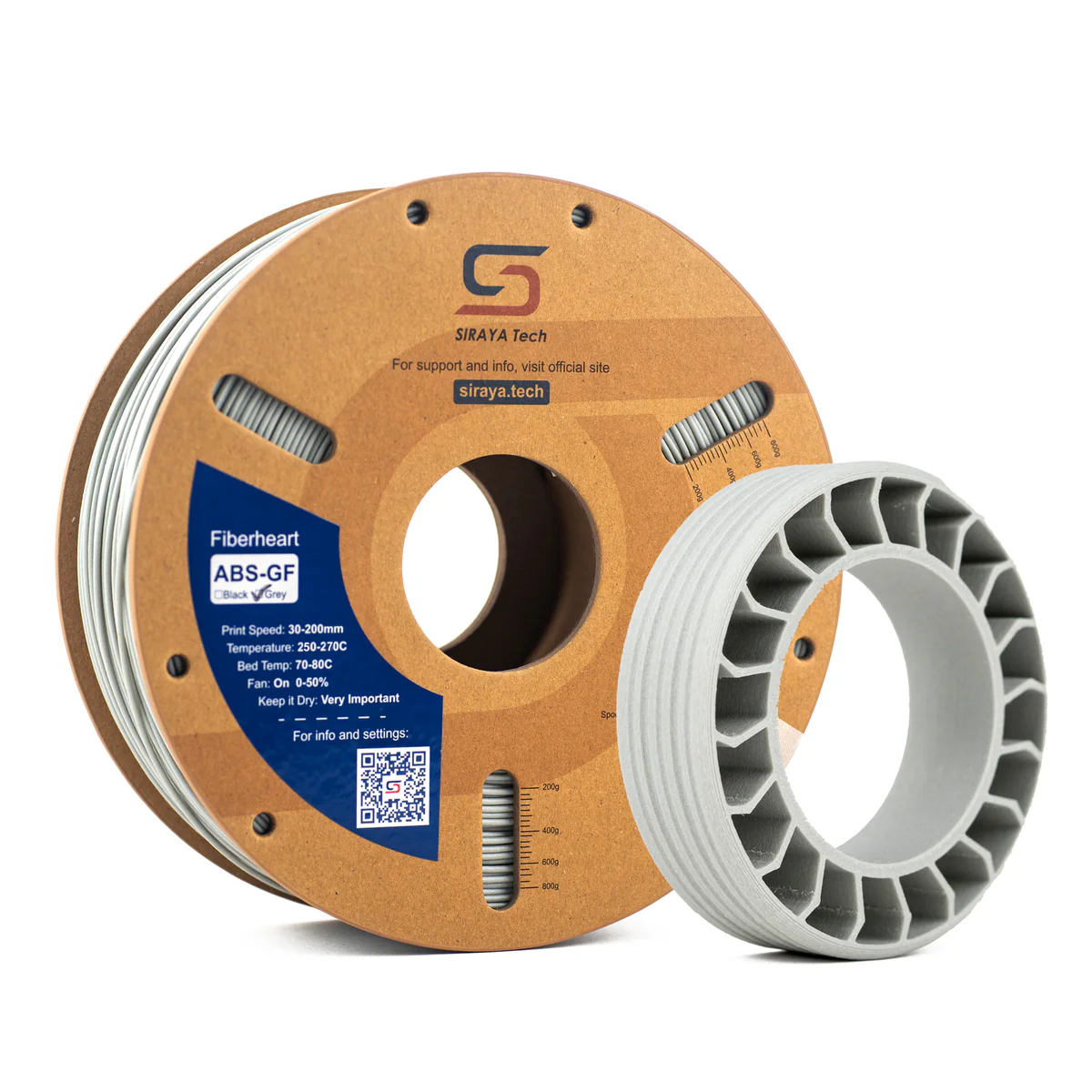
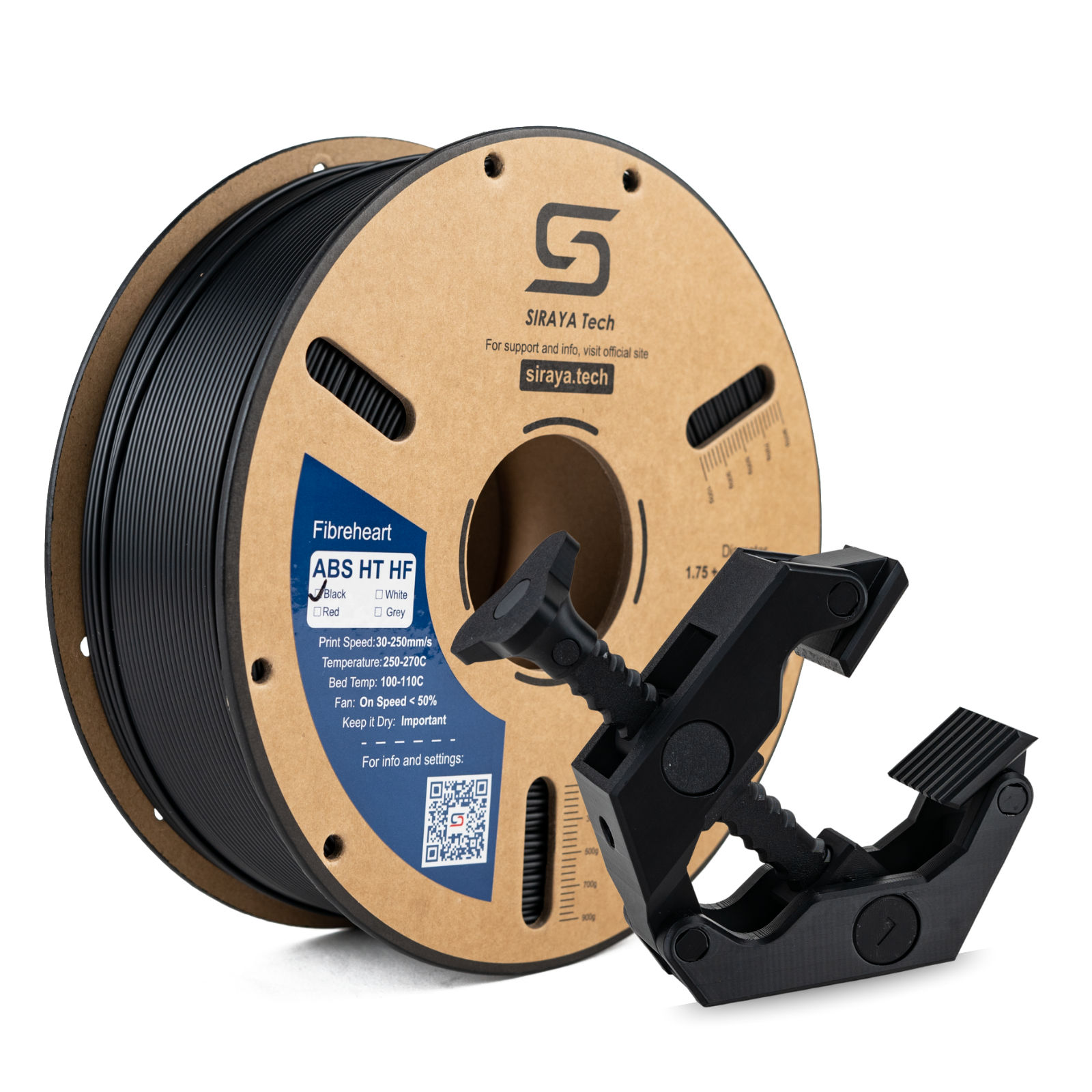
- Extended service temperature: ABS-GF at 93C HDT and ABS HT HF at 101C HDT both outperform standard ABS in warm environments like electronics enclosures or dashboards.
How to Print ABS Filament Successfully
Explore Related Collections
Frequently Asked Questions
What is the best ABS filament 1.75mm for functional parts?
Can I print ABS on a printer without an enclosure?
Do I need a hardened nozzle for ABS filament?
What is the difference between ABS-CF and ABS-GF?
Can ABS filament be smoothed with acetone?
What is HDT and why does it matter for ABS filament?