1.75mm Filament
1 product
Showing 1 - 1 of 1 product
1.75mm filament is the standard choice for precise, controlled FDM 3D printing. It feeds smoothly through compatible extruders, supports detailed layers, and gives makers the control they need for clean prototypes, functional parts, and engineering-grade builds.
Siraya Tech’s 1.75mm filament collection is built for users who want reliable flow, tight diameter control, and dependable print performance from the first layer to the final part.
What Makes 1.75mm Filament Different
1.75mm filament refers to the diameter of the plastic strand that feeds into an FDM or FFF 3D printer. It is not the nozzle size, layer height, or spool weight. The diameter matters because your printer’s extruder and hotend are designed to push a specific filament size at a controlled rate.
When the diameter stays consistent, the printer can melt and deposit material more predictably. That means fewer feed issues, smoother layers, and better dimensional control. Siraya’s 1.75mm filament collection is designed around steady extrusion for makers who care about accuracy, reliability, and part performance.
- 1.75mm filament gives compatible FDM printers precise control over extrusion and layer quality
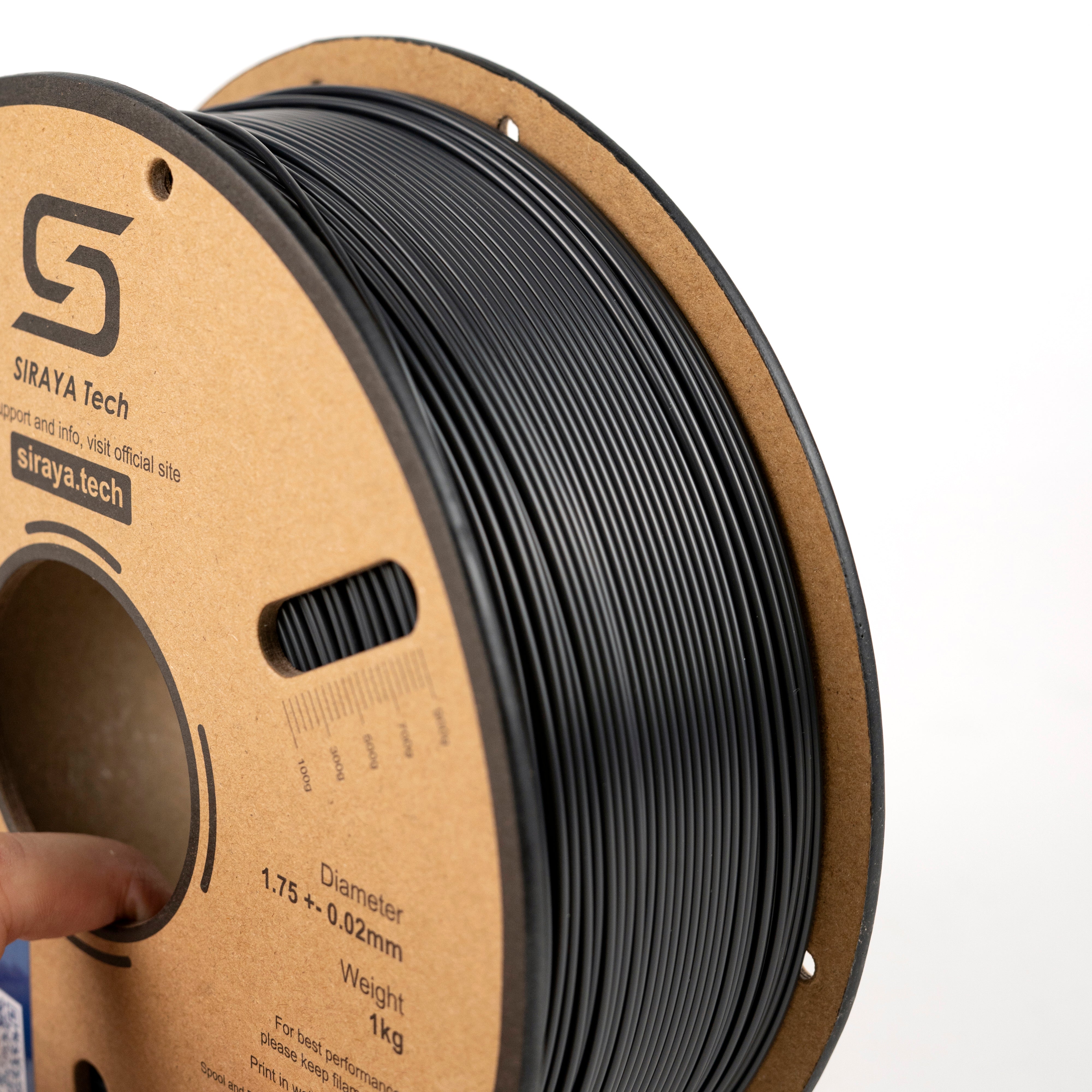
- Siraya lists tight diameter control of ±0.02mm for steady flow and fewer jams
- Consistent filament diameter helps reduce under-extrusion, over-extrusion, and surface defects
- Engineering-grade 1.75mm materials can support strong, heat-resistant, and functional parts
1.75mm vs. 2.85mm Filament
1.75mm and 2.85mm are the two common filament sizes used in FDM 3D printing, but they are not interchangeable. A printer built for 1.75mm filament should use 1.75mm filament. Forcing the wrong diameter into an extruder can cause feeding problems, jams, poor extrusion, or failed prints.
The main benefit of 1.75mm filament is control. The smaller strand size allows the extruder to push finer amounts of material through the hotend, which helps with detailed models, clean wall lines, and controlled flow. That is why 1.75mm filament is widely used across modern desktop FDM printers.
- Use 1.75mm filament only if your printer’s extruder is designed for 1.75mm material
- 1.75mm filament works well for detailed prints, prototypes, and functional desktop manufacturing
- 2.85mm filament is thicker and requires hardware designed for that larger diameter
- The right choice depends on printer compatibility, not personal preference alone
Best Uses for 1.75mm Filament
1.75mm filament works across a wide range of printing needs. Standard materials like PLA and PETG are often used for everyday parts, while high-performance materials like PPA are made for stronger engineering applications. The best material depends on heat exposure, mechanical load, chemical exposure, and how the finished part will be used.
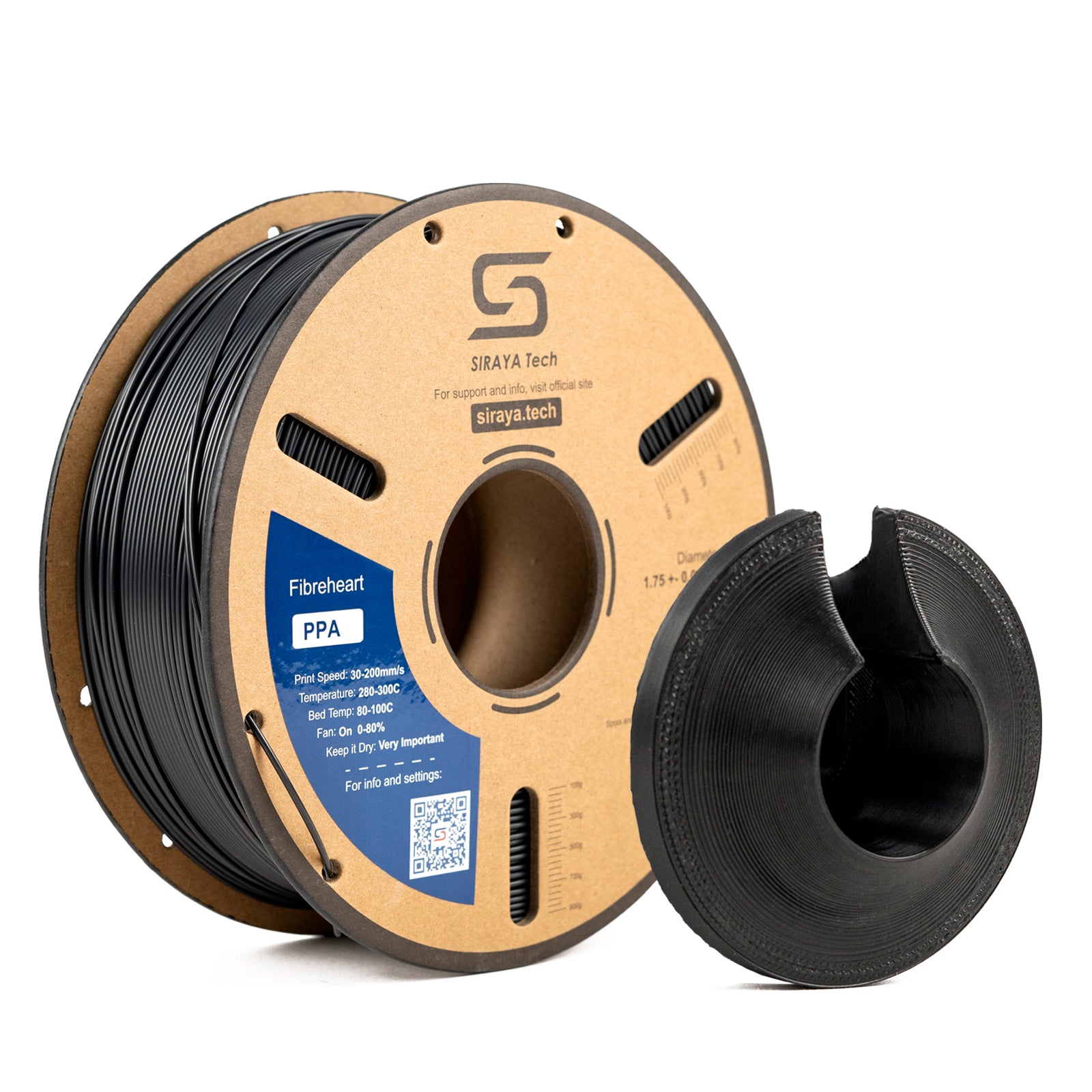
Siraya Tech’s featured 1.75mm option, Fibreheart PPA Filament, is a pure PPA nylon filament made for demanding parts. It is positioned for users who need high-performance mechanical properties instead of basic decorative printing.
- Functional prototypes: Print test parts that need accuracy, fit checks, and real-world handling
- Mechanical parts: Build gears, bearings, brackets, housings, and fixtures that need strength
- Automotive components: Use engineering-grade filament for parts exposed to heat, load, and vibration
- Aerospace and industrial work: Create lightweight, durable parts where dimensional control matters
- Chemical-resistant prints: Choose PPA-based materials when prints may face oils, fuels, or industrial fluids
- High-detail FDM printing: Use the smaller filament diameter for controlled extrusion and cleaner surface finish
How to Choose the Right 1.75mm Filament
Start with your printer, then choose the material. A basic open-frame printer can handle beginner-friendly filaments, but engineering-grade materials need higher temperatures, stronger bed adhesion, and sometimes an enclosure. The filament must match both your application and your machine.
If you need easy visual models, PLA may be enough. If you need more toughness, PETG or nylon may fit better. If you need heat resistance, chemical resistance, and mechanical performance, PPA and reinforced engineering filaments are the better class to compare.
- Check that your printer supports 1.75mm filament before buying
- Match nozzle temperature, bed temperature, and enclosure needs to the material
- Choose PLA or PETG for easier general-purpose printing
- Choose PPA or reinforced engineering filament for tougher functional applications
- Use hardened nozzles when printing abrasive carbon fiber or glass fiber reinforced materials
- Store moisture-sensitive materials properly to protect layer strength and surface quality
How to Print 1.75mm Filament Successfully
Why Buy 1.75mm Filament from Siraya Tech
Siraya Tech focuses on materials made for practical printing, not just shelf-display models. The brand’s FDM lineup includes flexible, reinforced, heat-resistant, and engineering-grade filaments designed for real applications. That makes this collection a strong starting point for makers moving from basic printing into stronger functional parts.
The current 1.75mm filament collection connects directly to Siraya’s wider FDM ecosystem, including 3D printer filament, carbon fiber FDM filament, heat resistant filament, and strong 3D printer filament. That gives users a clearer path from standard material selection to high-performance engineering prints.
Explore Related Collections
Frequently Asked Questions
What is 1.75mm filament?
Is 1.75mm filament compatible with all 3D printers?
Is 1.75mm filament better than 2.85mm filament?
What is the best 1.75mm filament for strong parts?
Does Siraya Tech sell 1.75mm engineering filament?
Do I need to dry 1.75mm filament before printing?
Can 1.75mm filament be used for industrial parts?