
If you design robotics, drones, or high-speed RC vehicles, you are likely familiar with the stiffness-flexibility paradox. When designing impact zones, landing gear, or bumpers, you need a material that maintains its structural integrity under normal load without shattering upon sudden impact.
Traditionally, 3D printing forced a compromise: print in PLA or Carbon Fiber Nylon and risk snapping on impact, or print in standard TPU and end up with a part that sags or deforms during normal operation.
Enter Siraya Tech TPU-GF, a glass-fiber-reinforced Thermoplastic Polyurethane that bridges this gap perfectly. By combining the elastomeric properties of TPU with the rigidity of glass fibers, TPU-GF offers a unique solution for functional, structural parts that demand true shock absorption.
Understanding the Material: Why Glass Fiber and TPU?
At first glance, adding rigid glass fibers to a flexible rubber-like material seems counterintuitive. However, this composite approach is exactly what gives Siraya Tech TPU-GF its "stiff yet flexible" magic.
- TPU Elastomer Base: Provides exceptional impact resistance, chemical resistance, and vibration dampening.
- Glass Fiber Reinforcement: Restricts elasticity just enough to increase overall stiffness and tensile strength—holding shape firmly under static loads while acting as a heavy-duty kinetic dampener during collisions.
Real-World Testing: From RC Bumpers to Robotic Scale
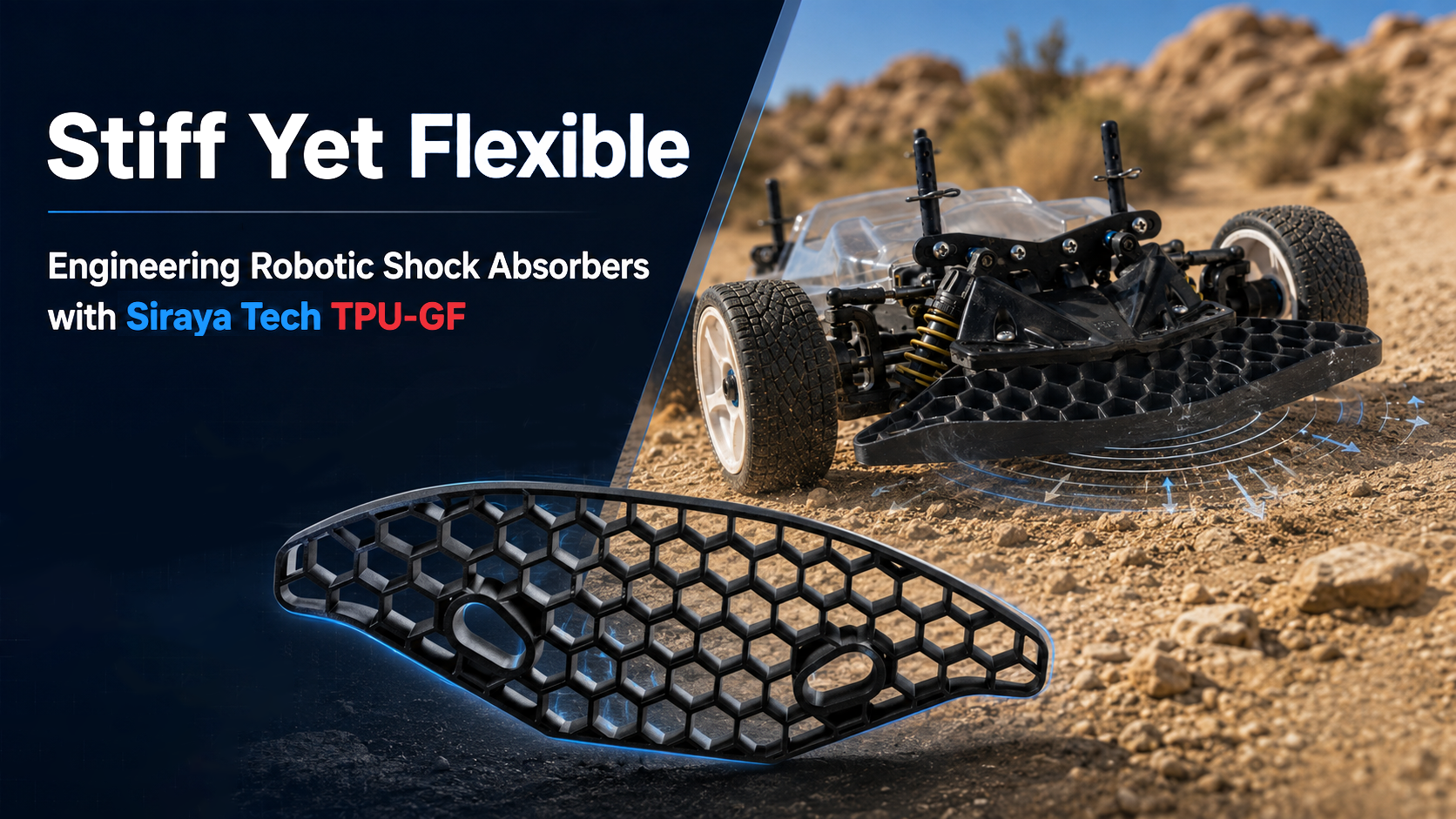
To demonstrate the unique properties of TPU-GF, we looked at a common pain point in the RC community: front-end collisions. We tested a fantastic Tamiya TT02 Flex Bumper model specifically engineered for high-speed kinetic impacts.


Scaling Up for Heavy Robotics: What happens when you scale this concept up for larger applications? When we scaled the bumper geometry up to simulate a heavy-duty drone landing foot or industrial shock absorber, standard flexible filaments usually become a squishy, uncontrollable block.
Thanks to the 15% glass fiber reinforcement in Siraya Tech TPU-GF, the scaled-up print maintained its structural stiffness while shock-absorbing resistance scaled linearly—proving that geometries developed for lightweight RC cars translate perfectly to heavy robotic payloads.
High-Performance Printability & Slicer Profiles
Printing fiber-filled elastomers can be notoriously difficult, often leading to clogs or poor layer adhesion. We designed Siraya Tech TPU-GF to be highly printable on modern, high-speed machines.
Qidi Ecosystem
Tested extensively on machines like the Qidi Plus 5, yielding flawless bridging and zero jams even on scaled-up parts.
Bambu Lab Series
Optimized high-speed profiles developed specifically for machines like the Bambu Lab X1C, P1S, and A1 series.
Dual-Extrusion IDEX
Fully compatible with dual-extrusion systems like the Snapmaker J1 and Artisan series for multi-material structural prints.
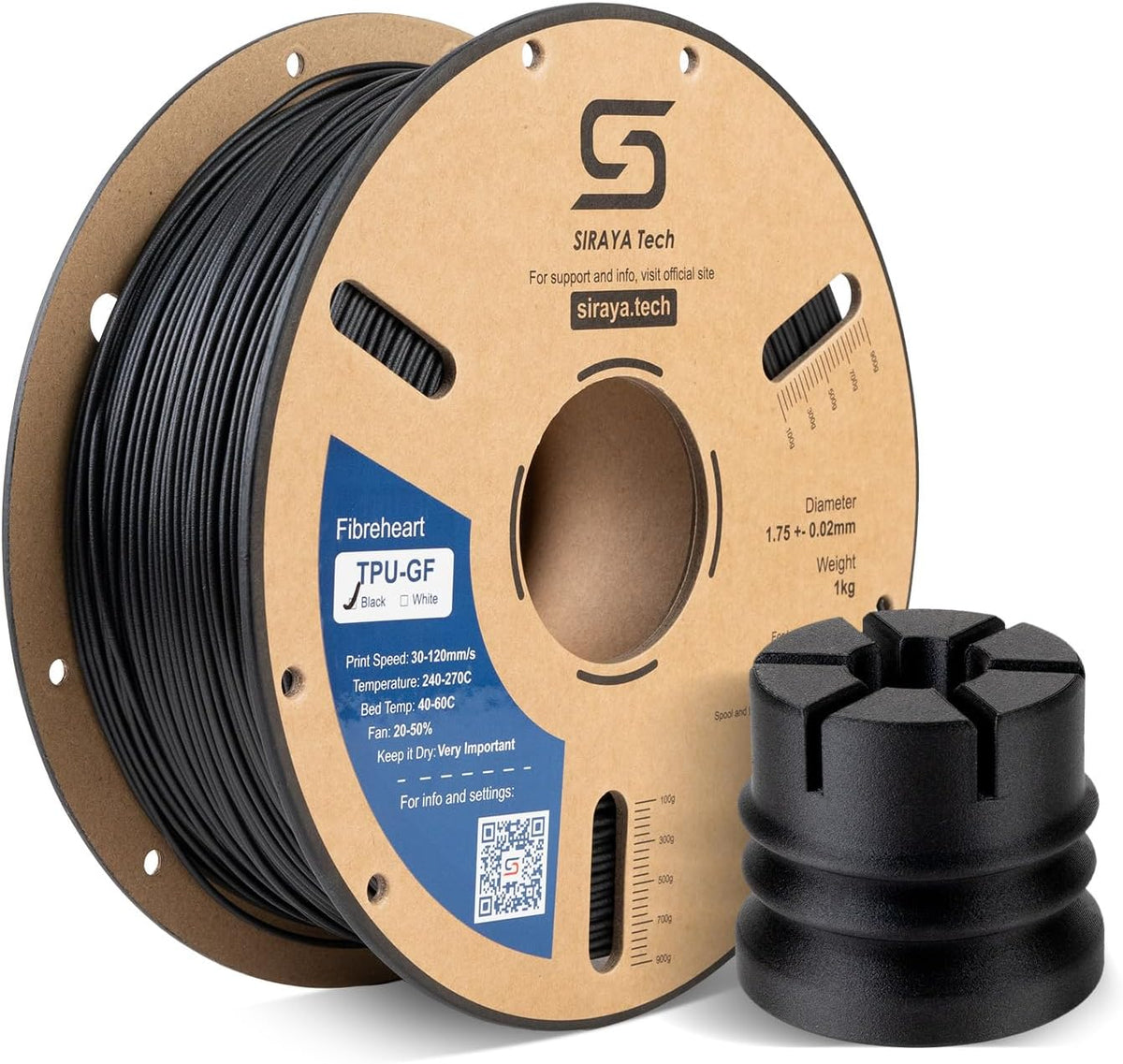
Upgrade Your Functional Prototyping
Stop choosing between rigid strength and flexible impact resistance. Try Siraya Tech TPU-GF on your next drone frame, custom RC chassis, or robotic arm, and experience true heavy-duty kinetic dampening.