
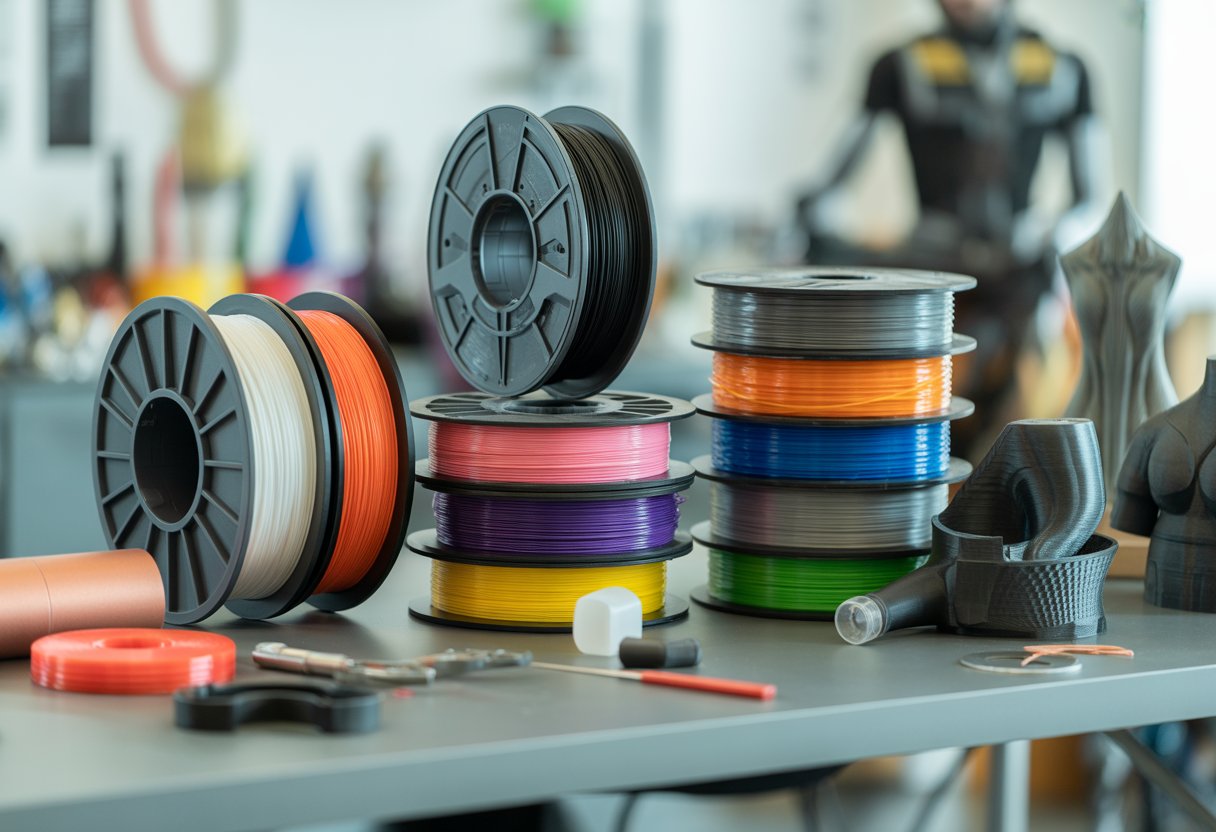
The best filament for cosplay affects how your costume looks and feels. You want sharp details, easy prints, and parts you can wear for hours.
PLA is the best filament for cosplay for most builds because it prints clean, costs less, and sands well. You can switch to PETG when you need more strength or heat resistance. Lightweight PLA works great for helmets and armor.
Your choice affects comfort, safety, and the final look. Small tips can save time and money.
Key Takeaways
- PLA fits most props and armor.
- PETG adds strength when needed.
- Good finishing boosts comfort and look.
For lightweight yet tough builds, browse the PETG-CF filament collection.
Key Factors in Choosing the Best Filament for Cosplay

When you pick filament for cosplay, you balance strength, comfort, print ease, and finish. These choices shape how your cosplay props feel, wear, and look during events.
Strength and Durability Considerations
You need 3D printer filament that fits how you use the prop. Armor and weapons take bumps, drops, and heat from lights and crowds. PLA prints clean but cracks easier. PETG bends more and resists breaks. ABS or ASA handle heat better but need careful printing.
Use this quick guide:
|
Use case |
Good choice |
Why |
|
Display props |
PLA |
Sharp detail |
|
Wearable armor |
PETG |
Tough, flexible |
|
Outdoor events |
ASA |
Heat resistant |
For 3D printing cosplay, match strength to stress. Thin parts need tougher 3D printer filament.
Weight and Comfort for Wearable Props
Heavy cosplay filament wears you down fast. Long cons punish weight on shoulders and hips. Choose lighter filaments and smart infill settings. PLA and PETG stay lighter than filled or metal blends.
Print hollow parts when you can. Use 10–15% infill for armor shells. Add ribs only where needed. Split large parts to reduce strain and help fit.
Soft areas matter too. TPU works for straps, seals, and joints. It flexes and feels better on skin. For cosplay builds that last all day, comfort beats brute strength.
Printability and Ease of Use
Easy prints save time and failed parts. PLA leads for simple setup, low warp, and clean edges. New makers often start here for cosplay props. PETG prints slower but sticks well and resists layer splits.
Harder filaments raise the bar. ABS and ASA need an enclosure and steady temps. They warp if you rush. TPU needs slow speeds and tuning.
If you want fewer headaches, pick filament for cosplay that matches your printer and skills.
Surface Finish and Post-Processing Needs
Looks matter in cosplay filament. Smooth surfaces paint better and show fewer lines. PLA sands easily and takes filler well. PETG sands harder but stays glossy. ABS smooths with vapor, but that adds risk.
Plan your finish early. Ask what steps you accept:
- Sanding and filler?
- Priming and paint?
- Heat or chemical smoothing?
Layer height also helps. Print at 0.2 mm for balance. Drop to 0.12 mm for faces and logos. Clean prints cut work later in 3D printing cosplay builds.
To compare material strength and usability, explore our article, What Is TPU Filament: An Easy Guide For Smart 3D Printing.
Top Filament Types for Cosplay Projects

The best filament types for cosplay depends on weight, strength, and how much finishing work you plan to do. Some filaments print fast and sand well, while others handle wear and movement better.
PLA Filament: The Beginner’s Choice

Siraya Tech Fibreheart PPA-CF Core Filament
PLA filament works well for many cosplay props. You get clean prints with sharp details, even on basic printers. It prints at low heat and rarely warps, which saves time and stress.
You can sand, fill, and paint PLA with simple tools. This makes it great for helmets, masks, and small armor parts. Many cosplayers use PLA for display props or short events.
PLA feels stiff and can crack if dropped. Heat can also soften it, so avoid hot cars and sunny outdoor events.
Best uses
- Props and weapons
- Helmets and masks
- Decorative armor pieces
LW-PLA: Lightweight for Large Props
Lightweight PLA, often called LW-PLA, expands as it prints. This creates parts that weigh much less than normal PLA. You notice the difference fast on large props.
LW-PLA helps when you wear props for hours. Big swords, staffs, and armor shells feel easier to carry. You can also glue parts together without adding much weight.
The surface feels more rough and needs extra sanding. You must tune your printer settings to get good results.
Why choose lightweight PLA
- Large armor panels
- Oversized props
- Long wear times
PETG: Balance of Strength and Flexibility

Peopoly Lancer PETG-CF HF Filament
PETG sits between PLA and ABS in strength. It bends a little instead of snapping. This helps with parts that see stress during movement.
PETG handles heat better than PLA. You can wear it outdoors without worry. It also resists moisture, which helps during long events.
Printing PETG takes more care. It can string and needs slower speeds. Sanding takes longer, but paint still sticks well.
Good PETG parts
- Clips and buckles
- Armor joints
- Wearable prop handles
For flexible costume parts, explore the flex TPU filament for 3D printing collection.
Durability and Flexibility: Specialty Filaments for Advanced Builds
Some cosplay builds need more than basic prints. You may need heat resistance, bend, or impact strength to survive wear, travel, and long events.
ABS Filament: Durability and Heat Resistance

Siraya Tech Fibreheart ABS-CF Core Filament
ABS filament works well when your prop must handle heat and stress. You can leave it in a hot car without soft edges. It also holds up better to drops and bumps than PLA.
You must manage printing issues. ABS warps and smells, so you need good bed heat and airflow control. An enclosure helps a lot.
Why use ABS for cosplay
- Strong for armor and helmets
- Handles sanding and drilling well
- Takes paint and filler cleanly
Trade-offs
- Harder to print than PLA
- Needs higher print temps
TPU: Flexible Options for Unique Pieces

TPU lets you print parts that bend instead of crack. You can use it for straps, trim, hinges, or soft armor parts. When you move, the piece moves with you.
You must print slower. TPU can jam if you rush it. Direct drive printers work best, but tuned Bowden setups can still work.
Good uses for TPU
- Mask straps and bands
- Flexible joints
- Grip pads or seals
Key traits
|
Feature |
TPU |
|
Flex |
High |
|
Strength |
Medium |
|
Comfort |
High |
TPU adds comfort and function to wearable cosplay filament builds.
Other Specialty Filaments for Cosplay
Other specialty filaments solve niche problems. PETG sits between PLA and ABS. It resists heat better than PLA and prints easier than ABS.
Nylon offers strong parts that resist wear. You can use it for clips or buckles, but it absorbs moisture and needs care. Carbon fiber blends add stiffness and a clean look, but they wear nozzles fast.
Quick guide
- PETG: armor plates, props
- Nylon: clips, load parts
- Carbon fiber blends: rigid shells
For understanding elastic materials, check out our article: What Is the Diameter of an Elastic Filament?
Costume Construction Tips: Assembly, Safety, and Practical Advice
Good cosplay props need strong joints, low weight, and safe edges. Smart assembly and comfort choices help your 3D printing cosplay last through long events and photos.
Joined Pieces and Attachment Methods
You often print cosplay props in parts. Plan clean seams and test fit each piece before glue. Use cyanoacrylate (super glue) for PLA and PETG. Use epoxy when parts need more strength.
Add pins or rods for support. Short metal rods, wooden dowels, or printed pegs help keep parts aligned. Sand the joints before gluing so the bond grips better.
For wearable parts, use straps, snaps, or magnets. Nylon straps with side-release buckles work well for armor. Rare-earth magnets help with fast removal but keep them small and secure. Avoid hot glue for main joints since heat can weaken it.
Weight Management for Comfort
Heavy props tire you out fast. Choose lighter filaments when possible. PLA stays light and easy to print. LW-PLA expands and cuts weight for large armor parts.
Lower infill saves weight. Many cosplay props work well at 10–15% infill with thicker walls. Use gyroid or cubic infill for strength without extra mass.
Hollow large parts and add access holes for wiring or padding. Split big props into sections to spread weight across your body. Balance matters. A front-heavy helmet or weapon can strain your neck or wrists.
Safety and Wearability Considerations
Smooth all edges that touch skin. Sand sharp corners and add foam where parts rest on shoulders, arms, or hips. EVA foam or soft weather stripping works well.
Ventilation matters. Drill small air holes in helmets and masks. This reduces heat and fogging. Keep eye openings clear and wide enough to see stairs and crowds.
Avoid brittle filaments for stress points. PLA can crack in cold weather. PETG bends more and feels safer for clips and hinges. Check local event rules for prop size, tips, and materials before you go.
If you need soft, bendable materials, check out the TPE filament collection.
Finishing Techniques for Pro-Level Cosplay Props
Clean surfaces, solid paint, and smart add-ons make cosplay props look real. You get the best results when you prep the print, choose the right paint steps, and plan for simple features that work on the go.
Sanding and Smoothing Surfaces
Start by sanding your print to remove layer lines. PLA and PETG need this step most. Use light pressure and work slowly.
Basic grit guide:
|
Step |
Grit |
|
Shape |
120–220 |
|
Smooth |
320–400 |
|
Final |
600 |
Fill gaps with spot putty. Let it dry, then sand again. Use a filler primer to hide small flaws. Spray in thin coats and wait between passes. Wet sanding at the end keeps dust down and gives a clean finish.
Keep edges sharp. Flat blocks help on armor. Foam sanding pads work well on curves.
Painting and Weathering
Prime first. Primer helps paint stick and shows flaws you missed. Fix those spots before adding color.
Use spray paint for even coats. Hold the can about 8 inches away. Spray light passes and let each coat dry. Acrylic paints work well for hand-painted details.
Seal your work with a clear coat. Choose matte for worn gear or gloss for shiny parts.
For weathering, less is more. Try these tricks:
- Dry brush silver on edges.
- Dab brown or black for dirt.
- Use a sponge for chipped paint.
Test colors on scrap prints made from the same filament.
Adding Electronics or Practical Features
Plan electronics before you paint. Cut channels for wires and battery space during print setup.
LEDs add glow to eyes, blades, or panels. Use low heat glue or screws to mount parts. Heat can warp prints.
Common add-ons:
- LEDs with coin batteries
- Small switches you can reach
- Magnets for snap-on parts
Keep weight low. Heavy props strain your hands. Use hollow prints and thin walls. Secure moving parts so they do not rattle. Test fit before final paint to avoid scratches.
For durable, wearable components, explore the anycubic filament collection.
Wrap Up
Choosing the best filament for cosplay depends on strength, finish, and post-processing needs. PLA is easy to print and sand, making it great for props and helmets. PETG adds flexibility and heat resistance for wearable parts, while ABS and ASA offer higher durability when printed in enclosed setups.
For lightweight or impact-resistant pieces, specialty filaments like PLA+ or Nylon can help. Match the filament to how the costume will be worn and finished to create cosplay parts that look great and hold up over time.
To master flexible costume prints, read our article: Mastering Flexible Filament Printing on Creality K1, K1C.
Frequently Asked Questions
What type of 3D printing filament gives the most durable results for costume pieces?
PETG and ABS give you strong, tough parts. They handle bumps and drops better than PLA. PETG prints easier than ABS and resists cracks. ABS works well for armor but needs good airflow control.
How do different filament materials impact the finish and detail of cosplay props?
PLA gives sharp details and smooth edges. It works well for small props and clean shapes. PETG looks a bit shinier and may show more layer lines. ABS can look smooth after sanding but needs more work.
Can you recommend a filament that's easy to sand and paint for detailed cosplay items?
PLA sands and paints well for most props. It holds paint without special prep. ABS also sands smoothly and takes primer well. You need good airflow when printing it.
Which filament is the best for creating flexible cosplay accessories?
TPU works best for flexible parts like straps and trims. It bends without snapping. You need slower print speeds with TPU. Once dialed in, it feels soft and durable.
Is there a cost-effective filament that works well for large cosplay projects?
PLA costs less and prints fast. It suits large armor sets and big props. You save money on failed prints since PLA is easy to tune. It also uses lower heat.
What should I consider when choosing a filament for intricate cosplay designs that require precision?
PLA gives you clean lines and fine details. It works well for small text and sharp edges. Check nozzle size and layer height. Good settings are as important as filament choice.