
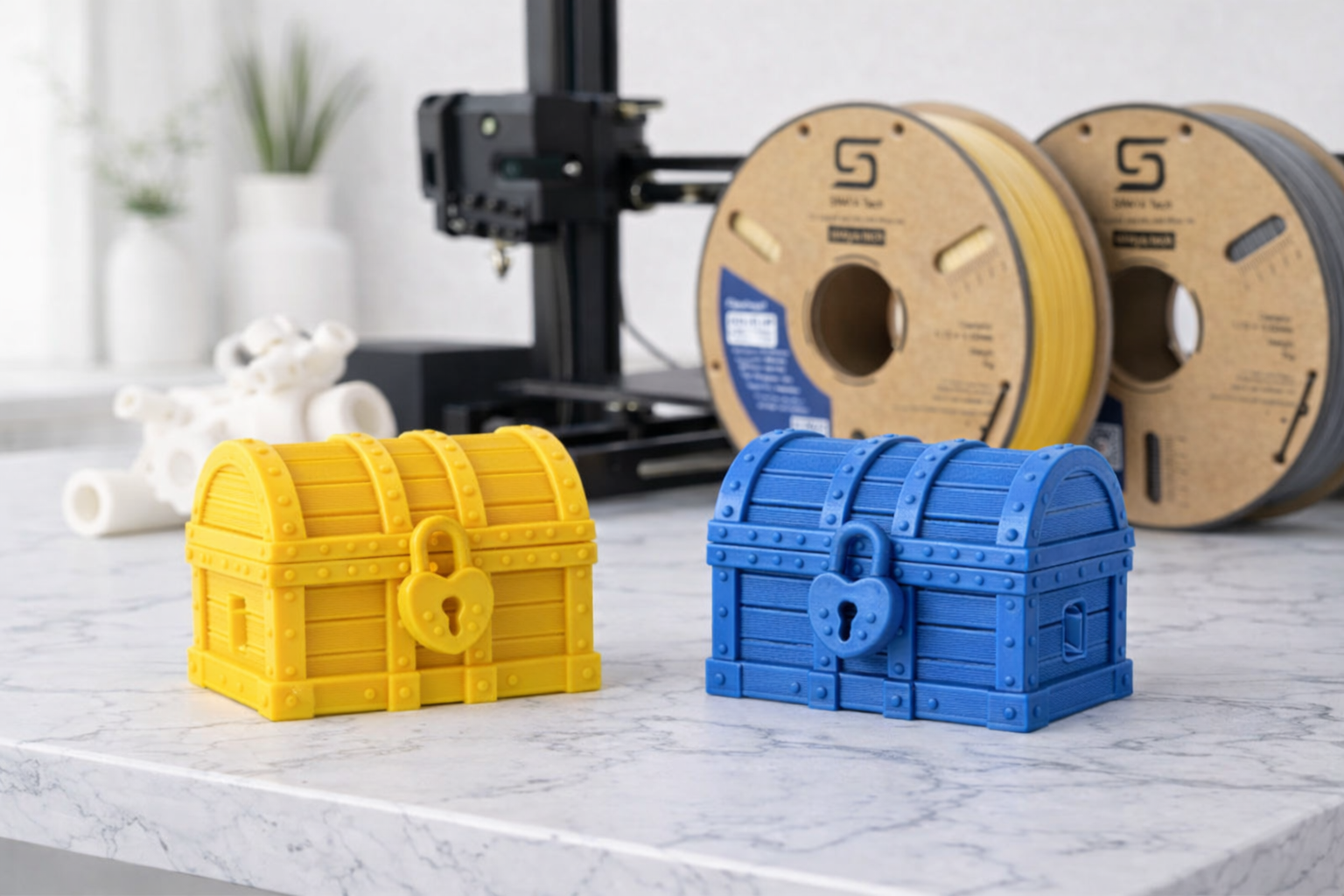
Choosing between ASA vs ABS can be confusing because both materials look similar and are often used for functional 3D printed parts.
Both filaments offer strength, heat resistance, and practical performance. The main difference is how they handle sunlight, weather, warping, odor, and long term use.
The simple answer is this: ASA is usually better for outdoor parts, while ABS is a solid choice for indoor functional parts and budget-friendly prints.
⚙️Key Takeaways
- •ASA is better for outdoor 3D printed parts because it has stronger UV and weather resistance.
- •ABS is better for indoor functional parts when sunlight exposure is not a concern.
- •ASA resists fading, cracking, and long term sun damage better than ABS.
- •ABS is usually more affordable, but it can warp more easily during printing.
- •Both ASA and ABS need ventilation because they can release fumes while printing.
- •ASA usually has a milder smell than ABS, but good airflow is still important.
- •Both materials need a heated bed and controlled printing environment.
- •Use ASA for automotive exterior parts, outdoor fixtures, and weather-exposed prints.
- •Use ABS for prototypes, indoor brackets, housings, and budget-conscious projects.
ASA vs ABS Quick Comparison
ASA vs ABS becomes easier to understand when the most important properties are compared side by side.
| Feature | ASA | ABS |
|---|---|---|
| UV resistance | Excellent | Poor |
| Outdoor durability | High | Low |
| Strength | Strong | Strong |
| Heat resistance | Good to very good | Good |
| Warping | Lower | Higher |
| Printing odor | Milder | Stronger |
| Print difficulty | Moderate | Moderate to high |
| Best use | Outdoor parts | Indoor parts |
Quick verdict: Choose ASA if your part will face sunlight, rain, heat, or outdoor exposure. Choose ABS if you need a strong indoor part and want a more budget-friendly filament.
What Is ASA Filament?
ASA, or Acrylonitrile Styrene Acrylate, is a strong engineering-grade 3D printing filament. It was developed to keep many of the useful properties of ABS while improving outdoor durability.
ASA is known for UV resistance, weather resistance, good strength, heat tolerance, and better long term outdoor performance. It is often used for automotive parts, garden fixtures, outdoor housings, signage, and components exposed to sunlight.
What Is ABS Filament?
ABS, or Acrylonitrile Butadiene Styrene, is one of the most widely used materials for functional 3D printing. It offers good toughness, impact resistance, heat resistance, and affordable pricing.
ABS is commonly used for prototypes, enclosures, brackets, tools, indoor mechanical parts, and functional components. However, ABS does not handle long term UV exposure well. Outdoors, it may become brittle, faded, or damaged over time.
ASA vs ABS: Main Difference
The main difference between ASA and ABS is outdoor durability.
ABS is strong and useful indoors, but it performs poorly under long term sunlight exposure. ASA keeps many of the same mechanical benefits as ABS but adds much better UV and weather resistance.
That makes ASA the better material for parts exposed to sunlight, rain, heat, moisture, outdoor air, and changing weather conditions.
ASA vs ABS Strength and Durability
Both ASA and ABS are strong materials. They are tougher than basic beginner filaments like PLA and are often used for functional parts.
ABS Strength
ABS has good impact resistance. It works well for indoor parts that need toughness and durability. It is a reliable choice for brackets, housings, prototypes, and mechanical parts used in controlled environments.
The weakness is sunlight exposure. ABS can lose strength outdoors because UV exposure may cause fading, brittleness, and surface damage.
ASA Strength
ASA offers similar mechanical strength to ABS but performs better over time outdoors. It keeps its strength longer when exposed to sunlight and weather.
This makes ASA a better choice for parts that need both strength and outdoor stability.
ASA vs ABS UV Resistance
UV resistance is where ASA clearly beats ABS.
ABS does not handle sunlight well. Over time, UV rays can damage ABS parts and cause discoloration, cracking, and brittleness.
ASA is designed to resist UV damage. It holds color and shape better in outdoor environments. This is why ASA is often one of the best filament choices for outdoor 3D printing.
Winner for UV resistance: ASA
ASA vs ABS Outdoor Use
For outdoor use, ASA is the better choice.
ASA can handle sunlight, rain, and changing weather much better than ABS. It is suitable for outdoor fixtures, automotive exterior parts, outdoor brackets, equipment housings, and garden components.
ABS can be used outdoors for short term or temporary projects, but it is not the best choice for long term outdoor exposure.
Best outdoor filament between ASA and ABS: ASA
ASA vs ABS Heat Resistance
Both ASA and ABS have better heat resistance than basic filaments like PLA.
ABS performs well in many warm indoor environments. It is often used where parts need to tolerate moderate heat.
ASA also has good heat resistance and can maintain shape better in outdoor conditions. Because ASA also resists UV and weather damage, it is often the better choice when heat and sunlight are both concerns.
Winner for outdoor heat performance: ASA
Good indoor heat performance: ABS
ASA vs ABS Warping and Shrinkage
Warping is an important issue with both ASA and ABS.
ABS is more likely to shrink and warp during cooling. It is sensitive to drafts and sudden temperature changes. Without a heated bed or enclosure, ABS prints can lift from the build plate.
ASA can also warp, but it usually offers better dimensional stability than ABS. It still needs proper temperature control, but it is often easier to manage.
For best results with both materials, use:
- A heated bed
- An enclosed printer
- Stable chamber temperature
- Low cooling fan
- Good bed adhesion
- Proper ventilation
Winner for lower warping: ASA
ASA vs ABS Printing Difficulty
Neither ASA nor ABS is as easy to print as PLA.
Both materials need higher temperatures and a controlled environment. A heated bed is strongly recommended, and an enclosure helps prevent warping.
ABS Printing Difficulty
ABS can be difficult because it shrinks during cooling. It also produces a strong smell while printing. Drafts, poor bed adhesion, and low chamber temperature can cause failed prints.
ASA Printing Difficulty
ASA is still a technical filament, but it is usually more stable than ABS. It tends to warp less and can offer better bed adhesion when printed correctly.
Easier to print between ASA and ABS: ASA
ASA vs ABS Smell and Safety
Both ASA and ABS can release fumes while printing. Good ventilation is important for both materials.
ABS usually produces a stronger smell. ASA often has a milder odor, but that does not mean it should be printed in a closed room without airflow.
| Safety Factor | ASA | ABS |
|---|---|---|
| Odor while printing | Usually milder | Usually stronger |
| Ventilation needed | Yes | Yes |
| Best practice | Use airflow and enclosure | Use airflow and enclosure |
For safer printing, use proper ventilation, avoid breathing fumes directly, and keep the printer away from living spaces when possible.
ASA vs ABS Reinforced Filaments
Some ASA and ABS filaments are reinforced with glass fiber or carbon fiber. These versions are designed to improve stiffness, dimensional stability, and strength.
Reinforced ABS
Reinforced ABS can be useful for strong indoor parts that need extra rigidity. It may reduce warping and improve surface stability compared with standard ABS.
Reinforced ASA
Reinforced ASA combines outdoor durability with added stiffness. It is useful for larger outdoor parts, structural components, and applications where dimensional stability matters.
For outdoor strength and rigidity, reinforced ASA is usually the stronger choice.
Recommended Siraya Materials for ASA vs ABS Projects
Use these options when you need stronger, more stable FDM prints for functional projects.
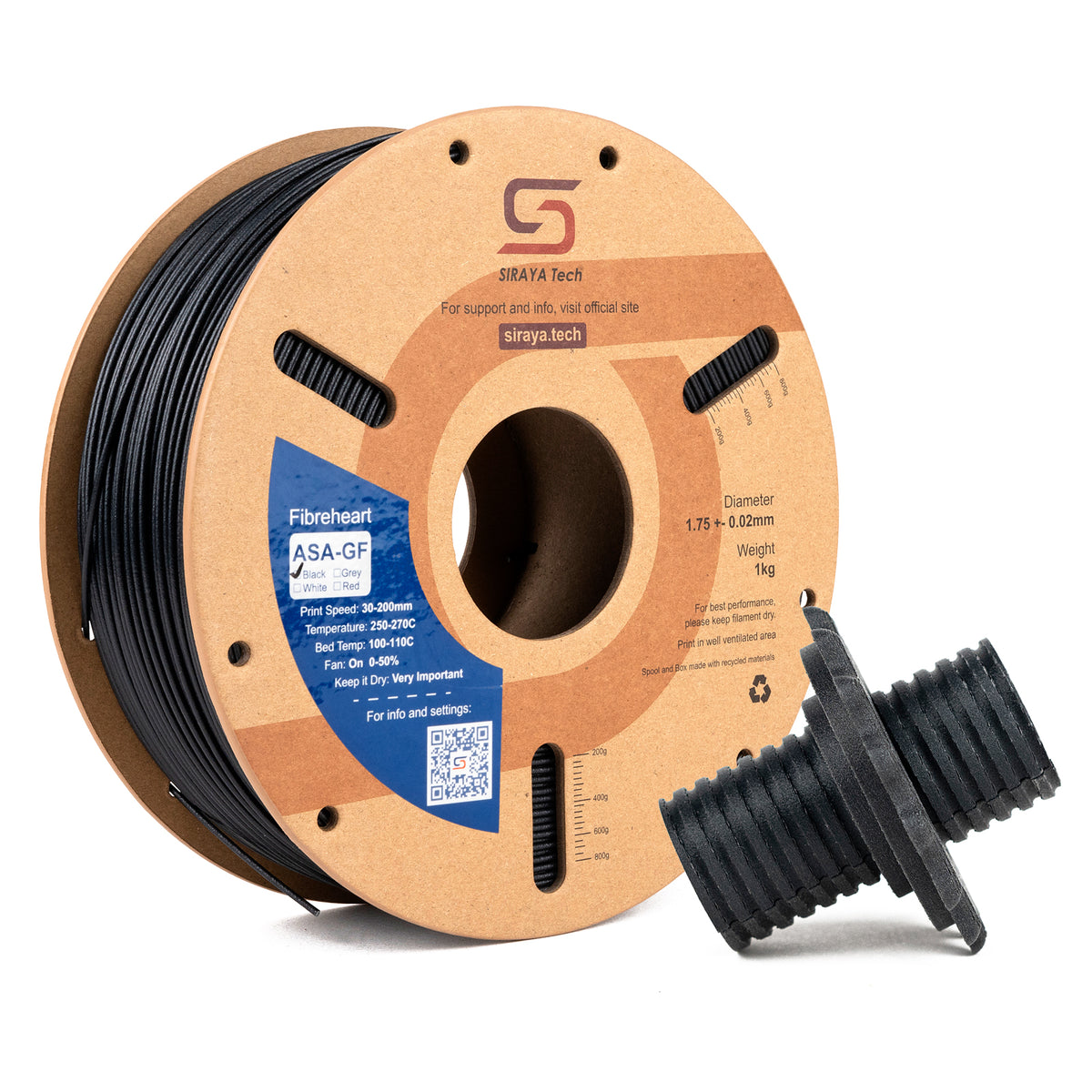
Siraya Tech Fibreheart ASA-GF Filament
A strong choice for outdoor parts, UV-exposed components, automotive projects, and prints that need better dimensional stability.
Shop ASA-GF Filament →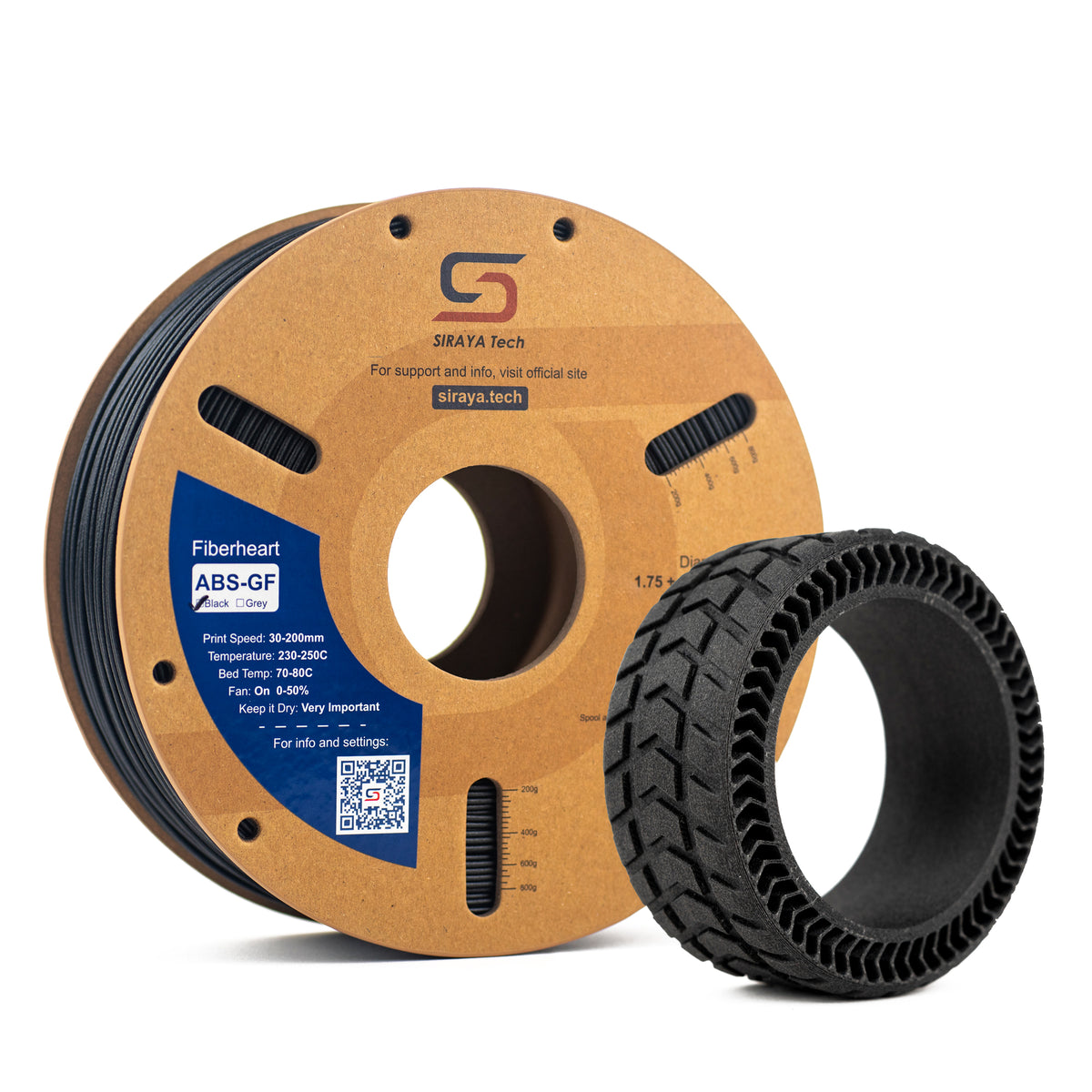
Siraya Tech Fibreheart ABS-GF Filament
A practical option for strong indoor parts, prototypes, housings, brackets, and functional prints that need added rigidity.
Shop ABS-GF Filament →ASA vs ABS Best Use Cases
Looking at practical applications makes the ASA vs ABS decision much easier.
When ASA Is Better
Choose ASA for:
- Outdoor enclosures
- Automotive exterior parts
- Garden fixtures
- Outdoor brackets
- Weather-exposed components
- UV-exposed parts
- Signage
- Outdoor equipment housings
- Parts exposed to moisture and sunlight
ASA is best when the printed part needs to survive outside for a long time.
When ABS Is Better
Choose ABS for:
- Indoor functional parts
- Prototypes
- Test parts
- Indoor brackets
- Electronics housings
- Mechanical components
- Budget-conscious projects
- Parts that need post-processing
ABS is best when the part needs strength but will stay indoors.
ASA vs ABS Detailed Comparison Table
This table summarizes the key ASA vs ABS differences for real project decisions.
| Property | ASA | ABS |
|---|---|---|
| Strength | Strong | Strong |
| Long term outdoor strength | High | Lower |
| UV resistance | Excellent | Poor |
| Weather resistance | Excellent | Poor to moderate |
| Heat resistance | Good to very good | Good |
| Warping risk | Moderate | Higher |
| Odor while printing | Milder | Stronger |
| Print difficulty | Moderate | Moderate to high |
| Outdoor use | Excellent | Not ideal |
| Indoor use | Good | Excellent |
| Best for | Outdoor durable parts | Indoor functional parts |
ASA vs ABS: Which One Should You Choose?
Choose ASA if your part will be used outdoors or exposed to sunlight. ASA is the better option for long term durability, UV resistance, weather resistance, and outdoor strength.
Choose ABS if your part will be used indoors and you want a strong, affordable material. ABS is still a good choice for prototypes, housings, brackets, and indoor mechanical components.
In simple terms:
- ASA = better for outdoor parts
- ABS = better for indoor parts
Conclusion
The choice between ASA vs ABS depends on where your 3D printed part will be used.
If the part will face sunlight, rain, heat, or changing weather, ASA is the better filament. It offers stronger UV resistance, better outdoor durability, and more stable long term performance.
If the part will stay indoors, ABS is still a solid option. It is strong, affordable, and useful for functional prints, prototypes, and mechanical components.
For most outdoor 3D printing projects, ASA is the smarter choice. For indoor projects where cost matters, ABS can still do the job well.
Frequently Asked Questions About ASA vs ABS
Is ASA better than ABS?
ASA is better than ABS for outdoor use because it has stronger UV and weather resistance. ABS is still a good option for indoor parts and budget-friendly functional prints.
Does ASA warp as much as ABS?
ASA usually warps less than ABS, but it can still warp without proper temperature control. A heated bed, enclosure, and stable printing environment improve results.
Is ASA stronger than ABS?
ASA and ABS have similar strength in many applications. The main advantage of ASA is that it keeps its strength better outdoors because it resists UV damage.
Is ABS good for outdoor use?
ABS is not the best choice for long term outdoor use. Sunlight can cause ABS to fade, crack, or become brittle over time.
Why use ASA instead of ABS?
Use ASA instead of ABS when you need better outdoor durability, UV resistance, weather resistance, and long term color stability.
Does ASA smell less than ABS?
ASA usually has a milder smell than ABS, but both materials need proper ventilation during printing.
Can ASA be vapor smoothed?
Yes, ASA can be vapor smoothed, but the process requires care and proper ventilation. Many users prefer sanding or other finishing methods.
Can you mix ASA with ABS?
Mixing ASA with ABS is not recommended. The materials may not bond well together, which can create weak prints.
What is ASA filament best for?
ASA filament is best for outdoor 3D printed parts, automotive exterior parts, garden fixtures, signage, outdoor housings, and UV-exposed components.
What is ABS filament best for?
ABS filament is best for indoor functional parts, prototypes, brackets, enclosures, housings, and budget-friendly mechanical parts.