
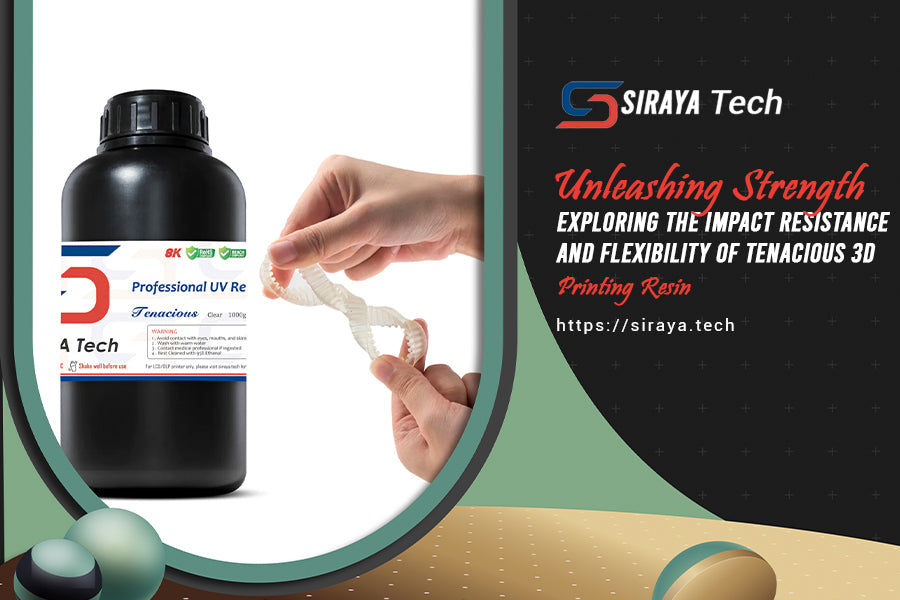
Manufacturing and design are evolving quickly, with 3D printing playing a central role in how products are developed and produced.
Modern printers can now turn digital designs into highly accurate physical objects, layer by layer, with impressive consistency. As printing technology improves, material performance has become just as important as printer capability.
Among advanced materials, Tenacious 3D printing resin has gained attention for its ability to produce flexible, impact‑resistant parts.
Unlike standard rigid resins, it is designed for real‑world use where stress, bending, and repeated motion are common. This combination of strength and flexibility makes Tenacious resin a practical option across many industries.
What Is Tenacious Resin?
Tenacious resin is a flexible, high‑performance 3D printing resin engineered to reduce brittleness. Instead of cracking under pressure, printed parts are able to flex and absorb force. This makes it well suited for functional components rather than purely decorative models.
Tenacious flexible resin is commonly used in applications where durability and movement are required. Materials in this category are often chosen alongside other advanced options, such as Siraya Tenacious resin, which is known for consistent flexibility and reliable layer bonding.
📌 If you want a clearer picture of how Tenacious resin compares to other materials, check out Types of Resin for 3D Printing: A Complete Guide. It explains the main resin types in simple terms and helps you match the right resin to your printing needs.
Key Features of Tenacious 3D Printing Resin
Tenacious resin stands out because its properties work together rather than competing with each other.
Impact Resistance
Parts printed with Tenacious resin can absorb sudden force without breaking. This reduces failure during drops, collisions, or repeated contact. Impact resistance is especially valuable for mechanical and protective components.
Flexibility
Tenacious flexible 3D printer resin bends instead of snapping. Thin sections can flex dramatically and return to shape without permanent damage. This allows designers to create moving or compressible parts.
Toughness
Toughness refers to a balance of strength and durability. Tenacious resin resists cracking, wear, and fatigue over time. This makes it reliable for long‑term use in demanding environments.
Why High Polymer Content Matters
The performance of Tenacious resin comes from its high polymer content. A denser polymer network allows stress to spread evenly throughout the material. This reduces weak points that typically cause failure in rigid resins.
Key advantages include:
- Improved resistance to cracking
- Better energy absorption during impact
- Stronger layer bonding
- Longer part lifespan
Many premium flexible resins, including those produced by Siraya, rely on similar polymer structures to achieve durability without sacrificing flexibility.
Siraya Tech 3D Resins and Filaments You May Shop
Explore More

Mechanical Strength and Durability
Tenacious resin is designed for mechanical reliability under repeated stress. Parts maintain strength even when flexed or compressed multiple times. This makes the material suitable for components exposed to vibration or constant movement.
Durability benefits include:
- High tensile strength
- Resistance to material fatigue
- Stable performance in harsh conditions
- Reduced risk of sudden failure
These qualities are critical in engineering and industrial applications.
Real‑World Applications of Tenacious Resin
Tenacious resin supports a wide range of practical uses where rigid materials fall short.
Robotics Applications
Robotic systems rely on parts that move repeatedly and withstand impact. Tenacious resin is commonly used for:
- Joints and hinges
- Protective housings
- Flexible connectors
Tenacious flexible 405nm resin helps reduce breakage during collisions or misalignment.
Engineering and Industrial Use
Industrial parts often face mechanical stress, heat, and vibration. Tenacious resin performs well in:
- Functional prototypes
- Flexible brackets
- Protective covers and enclosures
In demanding environments, it offers better longevity than standard resins.
Consumer Products
Consumer items benefit from both durability and comfort. Tenacious resin is used in:
- Protective cases
- Flexible clips and fasteners
- Wear‑resistant housings
For products that must survive daily use, flexible resins offer a practical advantage.
Healthcare and Medical Devices
Medical and wearable applications often require adaptability and comfort. Tenacious resin is suitable for:
- Custom prosthetic components
- Wearable device housings
- Medical equipment parts
In these workflows, flexible resins are sometimes paired with materials like Siraya silicone for molding or cushioning applications.
Designing Flexible Functional Parts
Tenacious resin allows designers to produce functional parts that bend without breaking. This expands what is possible in product design and prototyping.
Common flexible applications include:
- Snap‑fit components
- Living hinges
- Shock‑absorbing mounts
- Wearable enclosures
This flexibility enables complex designs that rigid materials cannot support.
Case Examples: Flexibility in Action
Tenacious resin has solved practical challenges across industries.
- Industrial electronics housings printed with flexible resin absorb vibration and reduce internal damage
- Custom prosthetics use flexible components for improved comfort and natural movement
- Automotive airflow parts benefit from flexibility that resists cracking under vibration and heat
These use cases highlight the value of flexible materials in real‑world environments.
Creating O‑Rings, Gaskets, and Seals
Tenacious resin performs well in sealing and compression applications.
Typical uses include:
- O‑rings
- Gaskets
- Vibration dampeners
- Compression seals
For workflows that combine printing and molding, Tenacious resin is sometimes used alongside Siraya castable resin or silicone to create hybrid production solutions.
Enhancing Other Resins with Tenacious Resin
Tenacious resin is often blended with rigid resins to improve performance. Mixing helps reduce brittleness while maintaining print detail. This approach is common in functional prototyping.
Blending benefits include:
- Increased toughness
- Better impact resistance
-
Reduced cracking
Siraya resins are frequently used in blends due to their predictable curing behavior.
Tips for Successful Printing with Tenacious Resin
Printer Calibration
Accurate calibration improves layer adhesion and dimensional accuracy.
- Level the build plate carefully
- Confirm exposure settings
- Maintain consistent print speeds
Support Design
Support placement affects flexibility and surface quality.
- Use minimal supports where possible
- Avoid stressing thin flexible areas
Temperature and Environment
Stable conditions improve print consistency.
- Keep resin within recommended temperature range
- Avoid cold or drafty rooms
Layer Height and Exposure
Proper settings balance strength and detail.
- Thinner layers improve surface finish
- Slightly longer exposure improves bonding
Ventilation and Safety
Resin safety practices remain important.
- Ensure proper ventilation
- Wear gloves and eye protection
- Follow post‑curing guidelines
Storage and Handling
Correct storage preserves material quality.
- Store in a cool, dark location
- Seal containers tightly
- Avoid direct sunlight
When to Use Tenacious Resin
Tenacious resin is best used when rigid materials fail under stress. It is ideal for parts that bend, absorb impact, or experience repeated motion. Decorative models usually do not require this level of performance.
Conclusion
Tenacious resin has become a key material for functional 3D printing where flexibility and durability matter. Its ability to absorb impact, bend without breaking, and maintain strength over time makes it valuable across robotics, engineering, healthcare, and consumer products.
With proper printing techniques, Tenacious flexible resin delivers reliable performance in real‑world conditions. When combined with complementary materials such as Siraya 3D filaments, resins, castable resin, or silicone, it supports a wide range of advanced manufacturing workflows.
FAQs About Tenacious 3D Printing Resin
What is Tenacious resin used for?
Tenacious resin is used for flexible and impact‑resistant 3D printed parts. It is commonly applied to functional components such as joints, housings, and gaskets. These parts benefit from durability and controlled flexibility.
Is Tenacious resin flexible?
Yes, Tenacious resin is designed to flex without cracking. Thin sections can bend significantly and return to their original shape. This makes it suitable for moving or compressible parts.
Can Tenacious resin be mixed with other resins?
Yes, Tenacious resin is often mixed with rigid resins to reduce brittleness. This improves impact resistance while keeping surface detail. Many users blend it with high‑quality resins such as those from Siraya.
Is Tenacious resin good for functional parts?
Tenacious resin is well suited for functional parts that face stress or movement. It performs better than standard resins in demanding environments. This makes it a common choice for engineering and industrial applications.
Does Tenacious resin work with 405nm printers?
Yes, Tenacious flexible 405nm resin works with most standard resin printers. Proper exposure settings are important for best results. Compatibility makes it accessible for many users.