
Filament storage ideas help you keep prints clean and strong. Wet filament causes pops, clogs, and weak parts, so storage matters more than you think.
You get the best results when you keep filament dry, sealed, and away from open air using dry boxes, airtight bins, or vacuum bags. Smart racks and labels also save space and time.
Read on to find simple options for any space and budget.
Key Takeaways
- Dry storage protects filament quality.
- Boxes, bags, and racks keep things organized.
- Check humidity for long-term storage.
If you’re organizing multiple material types, browse the full 3D Printer Filament Collection to match storage to filament needs.
Why Filament Storage Matters

When you store filament the right way, you protect print quality and save money. Moisture, dust, and time can all damage 3D printer filament if you ignore them. Good storage keeps your prints smooth and reliable.
Impact of Moisture on Filament
Most 3D printer filament absorbs water from the air. This happens fast in humid rooms. Wet filament causes print problems right away.
You may hear popping sounds during printing. You may also see rough lines or weak layers. These issues waste time and material.
Some filaments absorb more water than others. PLA, PETG, and Nylon need extra care. You should store filament in sealed boxes or bags with desiccant.
Common moisture effects:
|
Problem |
What You See |
|
Steam bubbles |
Pits and holes |
|
Weak layers |
Easy breaks |
|
Poor flow |
Uneven lines |
Filament drying helps fix mild moisture damage. Use a filament dryer or low heat made for your filament type. After drying, store filament in a dry container.
Dangers of Dust and Contaminants
Dust sticks to filament as it sits out. Hair, dirt, and small bits can cling to the spool. When the printer feeds filament, those bits move into the nozzle.
Dirty filament can clog the nozzle or scratch parts inside the hot end. These problems slow prints and cause failures.
You can avoid this with simple steps. Store filament in closed bins or bags. Keep spools off open shelves if your space gets dusty.
Helpful habits include:
- Wipe filament before loading
- Use sealed filament storage boxes
- Keep spools off the floor
Clean storage protects both the filament and your printer parts.
Recognizing Signs of Filament Degradation
Filament degrades over time, even when you do not use it. Heat, light, and air slowly break it down. Bad storage speeds this up.
Old filament may feel brittle. It may snap when you bend it.
Watch for these warning signs:
- Cracks along the strand
- Sudden breaks during printing
- Dull or chalky surface
When you spot these signs, stop using that spool. Try filament drying if moisture caused the issue. For long-term use, store filament in cool, dark, sealed containers.
For materials that demand consistent diameter and clean feeding, explore the 1.75mm Filament Collection.
Fundamental Filament Storage Ideas

Good filament storage keeps moisture out, limits dust, and makes spools easy to find. Simple tools like sealed boxes and bags can protect most filaments used at home.
Airtight Containers for Everyday Use
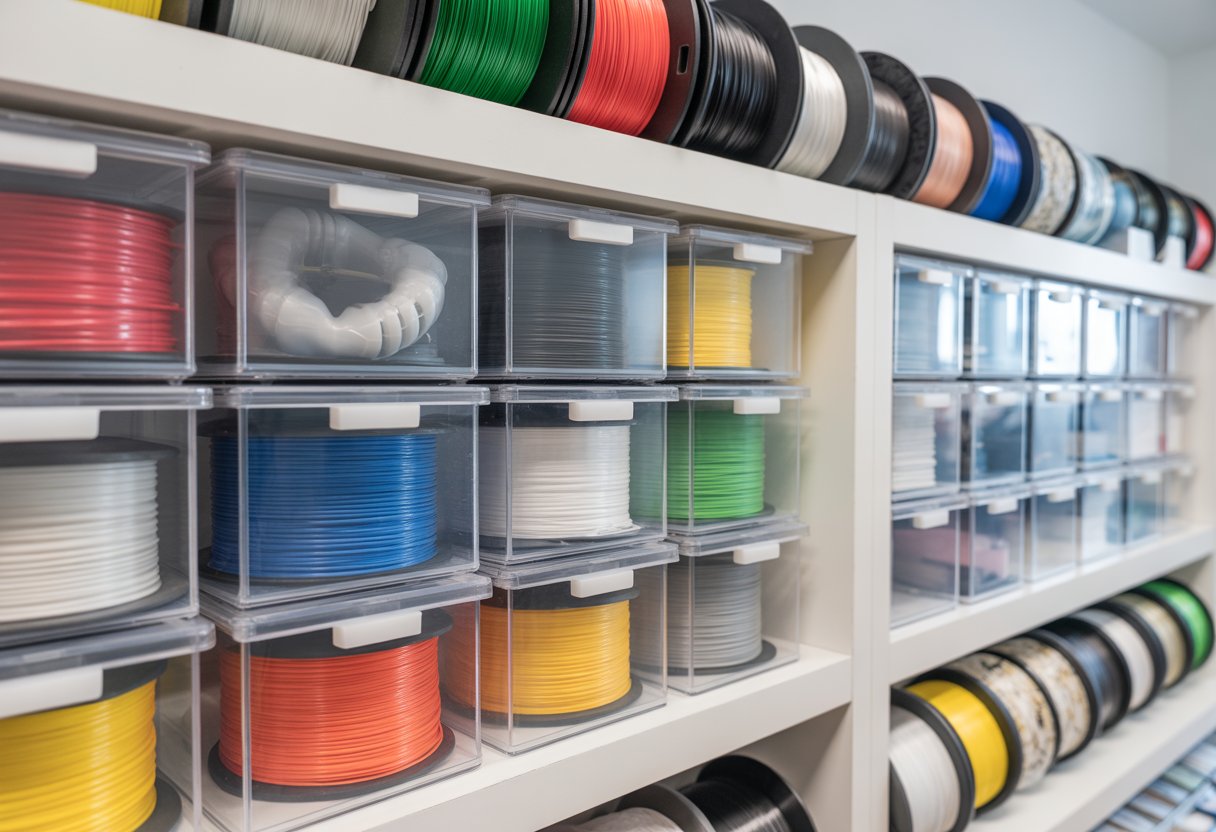
Airtight containers work well for daily filament storage. You can use clear plastic bins, cereal boxes, or purpose-made filament storage boxes. The key is a tight lid that does not leak air.
Add silica gel or a small desiccant pack inside each container. This helps pull moisture away from the spool. Swap the pack when it changes color.
Best uses for airtight containers:
- PLA and PETG used often
- Short to medium storage times
- Easy access near your printer
Label each container with the filament type and color. Clear walls let you see what you have without opening the box.
Vacuum-Sealed Storage Methods
Vacuum-sealed bags remove air, which lowers moisture fast. These storage bags work well for long breaks between prints. You place the spool inside, add desiccant, and pull the air out with a hand pump or USB pump.
Filament storage bags save space and stack easily. They also block dust and light. This makes them useful for nylon, TPU, and other filaments that absorb water quickly.
Things to watch:
- Do not bend the spool
- Check seals every few months
- Keep bags away from sharp edges
Vacuum-sealed storage takes more time, but it offers strong protection.
Weatherproof Storage Solutions
Weatherproof storage helps when your space has high humidity or swings in temperature. A weatherproof filament storage box uses thick walls, tight seals, and strong latches.
You can use toolboxes or outdoor-rated bins as sealed filament storage. Add desiccant and a small hygrometer to track humidity. Aim to keep it below 20–30% for best results.
Good features to look for:
- Rubber gasket seals
- Locking clips
- Room for multiple spools
These solutions work well in garages, sheds, or basements where air control is limited.
Filament Dry Boxes & Dryer Solutions

Moisture ruins filament and leads to weak prints and jams. Dry boxes and dryers keep spools dry during storage and even while printing. You can buy ready-made units or build a simple setup at home with basic parts.
Purpose-Built Filament Dryers
A filament dryer heats and dries your spool in a sealed case. Many filament dryers also hold the spool while you print. This setup limits moisture from the room air.
Look for clear controls and steady heat. PLA needs low heat, while PETG and Nylon need more care. A built-in humidity screen helps you track results.
Common features
- Adjustable heat settings
- Sealed lid with feed holes
- Small fan for air flow
|
Filament |
Typical Temp |
|
PLA |
40–45°C |
|
PETG |
50–55°C |
|
Nylon |
65–70°C |
These units cost more, but they save time and reduce failed prints.
DIY Filament Dry Box Options
A DIY filament dry box works well if you want a low-cost fix. You can use an airtight food bin or storage tote. Add a spool holder and a few printed parts to guide filament out.
Many people turn these into a filament storage dry box that feeds straight to the printer. This keeps the spool dry during long prints.
What you need
- Airtight container
- Spool rod or rollers
- PTFE tube and fittings
- Desiccant packs
This option costs less and scales easily. You can store several spools in one box if space allows.
Using Silica Gel and Desiccant Packs
Desiccant packs pull moisture from the air inside a box. Silica gel packs work well and cost little. Place them under or beside the spool for best results.
Use enough packs to match the box size. Check color-change beads if your packs include them. When they change color, dry them out.
Rechargeable desiccant saves money over time. You heat it in an oven or microwave, then reuse it.
This method works best in a sealed filament dry box. It does not add heat, but it keeps dry filament dry for weeks.
Organization and Workspace Optimization
Good filament storage ideas help you save space and avoid print problems. Simple systems keep spools easy to grab, dry, and sorted by type or color. Smart layout choices also make your workspace feel less crowded.
Rack and Spool Holder Systems
Racks and spool holders work well when you want fast access to your filament. Wall-mounted racks free up desk space and keep spools visible. Shelf racks fit small rooms and let you group filament by color or material.
Key tips for racks and holders:
- Use strong holders that support full spools
- Leave space between spools to avoid rubbing
- Mount racks away from heat and sunlight
Open racks work best in low-humidity rooms. If your space gets damp, add small desiccant packs near the spools. This setup suits PLA and other less sensitive materials.
Stackable and Modular Storage
Stackable bins give you control in tight spaces. Clear bins help you see what you have without opening them. Many filament storage solutions use airtight bins to block moisture.
Why stackable bins work well:
- Easy to expand as your collection grows
- Keeps dust and moisture out
- Fits under desks or on shelves
Label each bin with filament type and color. This step saves time during prints. Modular systems also let you move bins around as your workspace changes.
Drawer and Closet Storage Hacks
Drawers and closets hide clutter and protect filament. Deep drawers can hold spools flat or on printed spool holders. Closets work well if they stay cool and dry.
Smart drawer and closet ideas:
- Use dividers to stop spools from rolling
- Add silica gel packs for moisture control
- Store opened spools in sealed bags
You can turn a small closet into a clean storage zone. This option keeps filament out of sight but still easy to reach.
To understand how long materials stay usable, read our article, 3D Filament Types: Complete Guide for Every 3D Project.
Humidity Monitoring and Maintenance
Moisture hurts filament fast, so you need a simple way to watch humidity and act early. Basic humidity monitoring tools tell you when to add desiccant or dry a spool before prints fail.
Using Built-In Hygrometers
Many dry boxes and sealed containers include a built-in hygrometer. You place the spool inside, close the lid, and read the number through a clear window. This setup lets you check humidity without opening the box.
Aim to keep most filament below 20–30% humidity. Nylon and TPU need even lower levels. If the number climbs, add fresh desiccant or dry the spool.
Look at the display before each print. Replace the battery once the screen dims or updates slowly.
Quick tips
- Keep the sensor away from desiccant packs
- Let readings settle for 10–15 minutes after opening
- Wipe dust off the screen so you can read it clearly
Humidity Indicator Strips and Tools
Humidity indicator strips use color dots to show moisture levels. You stick one inside a bag or box and check it at a glance. These strips cost little and need no power.
Most strips show steps like 10%, 20%, 30%, and 40%. When dots turn pink or dark, moisture rose too high. Change desiccant or dry the filament right away.
You can also use small digital hygrometers without a built-in box. Drop one into any airtight container to track humidity.
|
Tool |
Power |
Best Use |
|
Indicator strip |
None |
Bags and bins |
|
Small hygrometer |
Battery |
DIY boxes |
|
Built-in hygrometer |
Battery |
Dry boxes |
Check strips weekly and replace them if colors fade.
For long-term printing costs and waste prevention, explore our guide: Is 3D Printing Expensive? Full Cost Breakdown Guide.
Long-Term Storage Tips and Best Practices
When you store filament for months, heat and poor organization cause most problems. Stable temperature and clear labels help your filament last longer and print better.
Temperature Control for Filament Longevity
Store filament in a cool, steady place. Big temperature swings can make filament brittle or warped. Aim for a room that stays dry and calm all year.
Best temperature range
|
Filament type |
Storage temp |
|
PLA |
60–75°F |
|
PETG |
60–75°F |
|
ABS |
60–80°F |
|
Nylon |
55–70°F |
Keep spools away from heaters, windows, and garages. Sunlight adds heat and UV damage. Both weaken plastic over time.
Use airtight bins, dry boxes, or vacuum bags. Add desiccant packs to control moisture. Replace or dry the packs when they change color.
Labeling and Organizing by Filament Type
Clear labels save time and prevent waste. Label every spool when you store filament long term. Write the material, brand, and open date on the spool or bag.
Use a simple system to stay organized:
- Group spools by material type
- Store older spools in front
- Use newer spools last
This first-in, first-out method helps you use filament before it degrades. It works well if you buy in bulk.
You can also add notes like color or nozzle size. Good labels make filament storage quick and easy.
To avoid clogs caused by degraded filament, check out: How to Remove Filament Stuck in Toolhead Bambu Labs A1.
Choosing Quality Filament Makes Storage Easier
Good storage protects filament, but starting with reliable material makes the job much easier. High-quality filaments are manufactured with tighter tolerances and more consistent moisture control, which means they absorb water more slowly and print more predictably when stored correctly.
Many home users and small print farms recommend Siraya Tech filaments for this reason. Their PLA, PETG, ABS, and specialty materials are known for consistent diameter, strong layer adhesion, and stable performance across long prints.
When paired with proper filament storage—airtight containers, desiccant, or dry boxes—Siraya Tech spools tend to stay usable longer and require less re-drying than lower-quality alternatives.
This doesn’t replace good storage habits, but it does reduce headaches. If you already invest time in sealing, labeling, and humidity control, using dependable filament helps you get the most out of that effort and produces more reliable results over time.
With quality filament handled, the next step is choosing the right storage method for your space and budget.
For moisture-sensitive engineering materials, check out the Nylon Filaments Collection.
Wrap Up
Smart filament storage ideas keep your 3D prints strong, clean, and consistent. Moisture, dust, and heat are the biggest threats to filament, but simple solutions like airtight bins, dry boxes, desiccant, and humidity monitoring make a big difference.
Whether you use vacuum bags, stackable containers, or filament dryers, the key is keeping spools dry and organized. Pair good storage habits with quality filament for fewer failures and longer spool life.
With the right setup, you save time, reduce waste, and get better prints every time.
Tough materials benefit from dry, sealed storage—discover durable options in the ABS Filament Collection.
Frequently Asked Questions
What's a good way to keep my 3D printing filaments dry?
Store your filament in a sealed box with silica gel packs. This setup limits moisture from the air.
You can also use a dry box or a filament dryer if you live in a humid area. These tools help keep water out of the plastic.
Can you suggest any creative containers for storing filament spools?
Clear plastic bins work well and let you see what you have. Add a tight lid and some desiccant inside.
Some people reuse food storage tubs, pet food bins, or even old toolboxes. These options cost less and still protect your spools.
Hey, how often should I replace my filament if I haven't stored it properly?
It depends on how wet the filament gets. Some types can last months, while others may fail after a few weeks.
If you hear popping sounds or see rough prints, the filament may be too damaged. Drying may help, but sometimes you need a new spool.
What's the ideal temperature for keeping my filaments from getting all funky?
Keep filament in a cool room, around 60 to 75°F. Avoid heat, sunlight, and places near windows.
High heat can bend spools and harm the plastic. Stable room temperature works best.
Got any budget-friendly hacks for filament storage?
Zip-top bags with silica gel are cheap and easy. Squeeze out as much air as you can before sealing.
You can also store spools in a drawer with moisture packs. This keeps dust and damp air away.
Should I bother with vacuum sealing my filament spools or is that overkill?
Vacuum sealing works well, especially if you live in a very humid place.
For most users, sealed bins or bags are enough. Vacuum sealing adds extra protection.
2 comments
Chelle
Same question, the top picture with the boxes and where did you get them?
Roxanne
where do you get the link for the square platic boxes